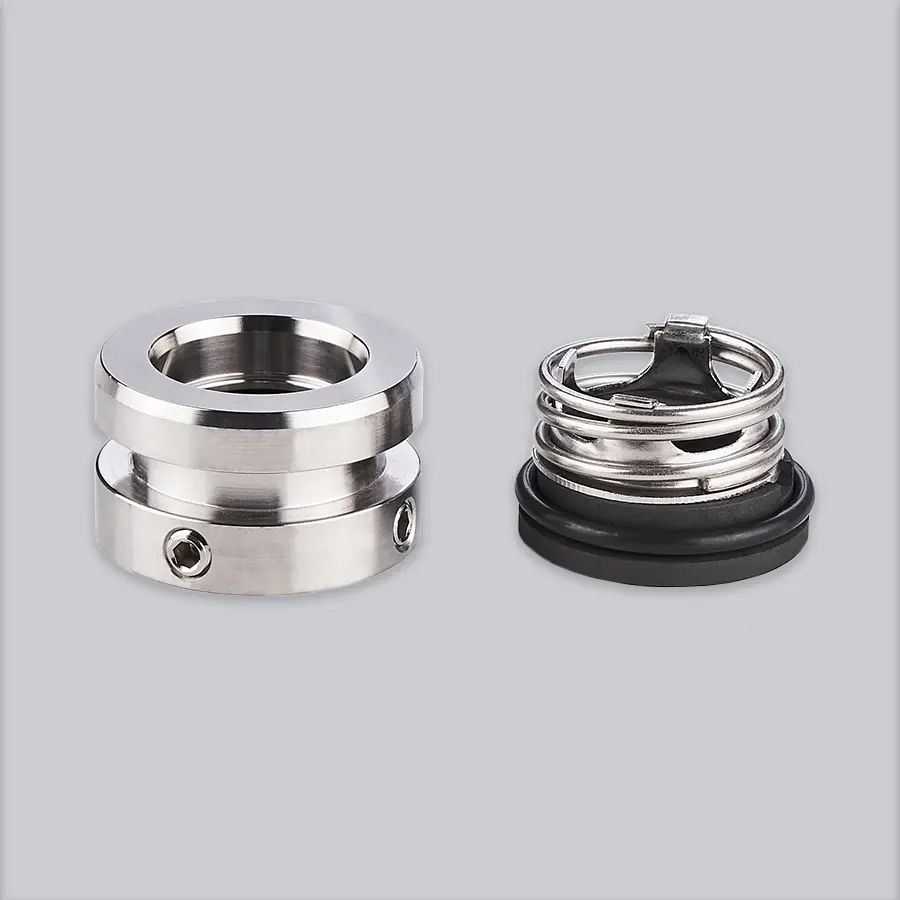
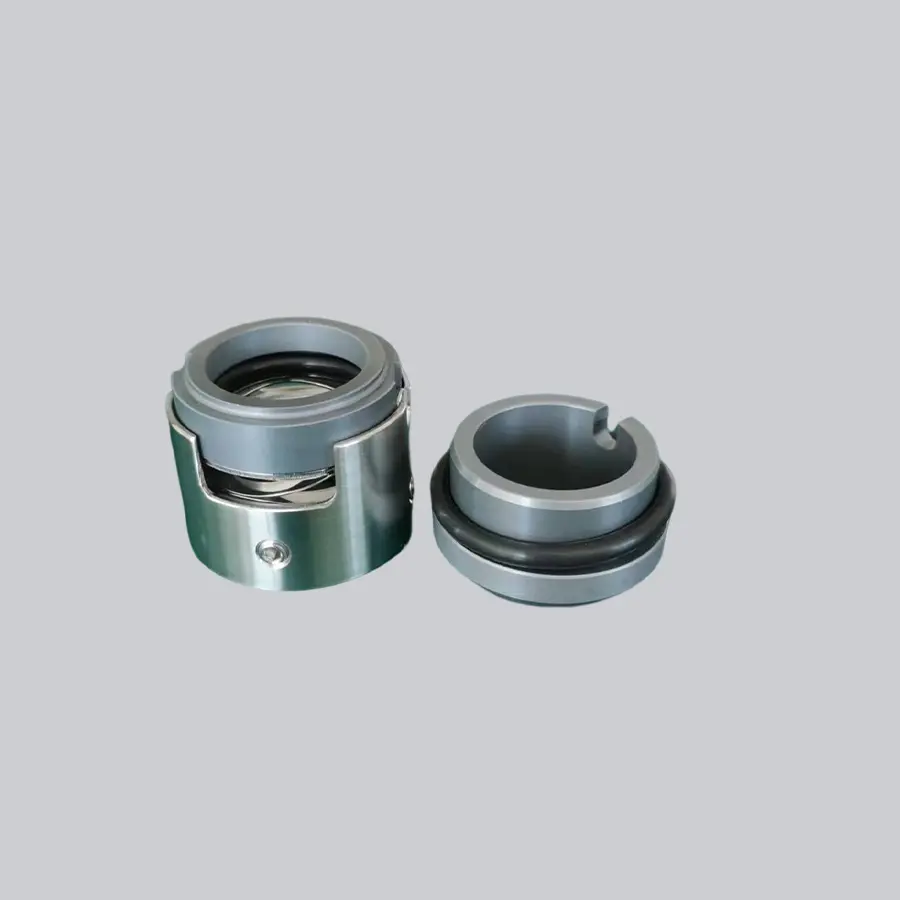
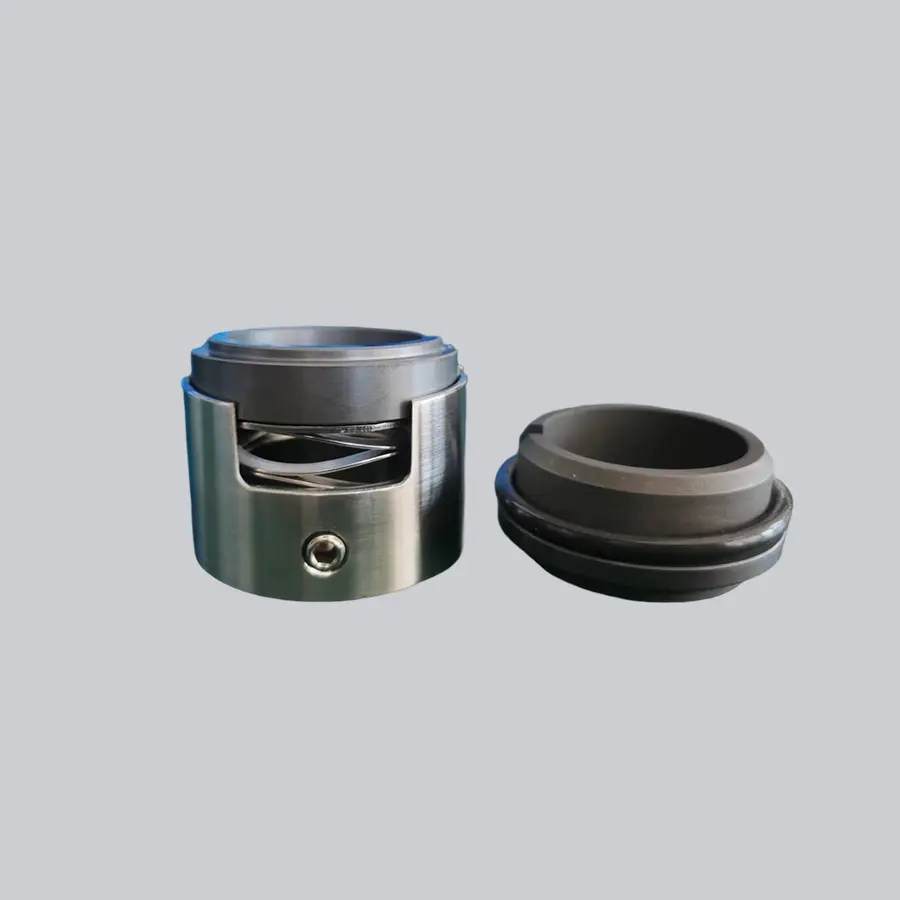
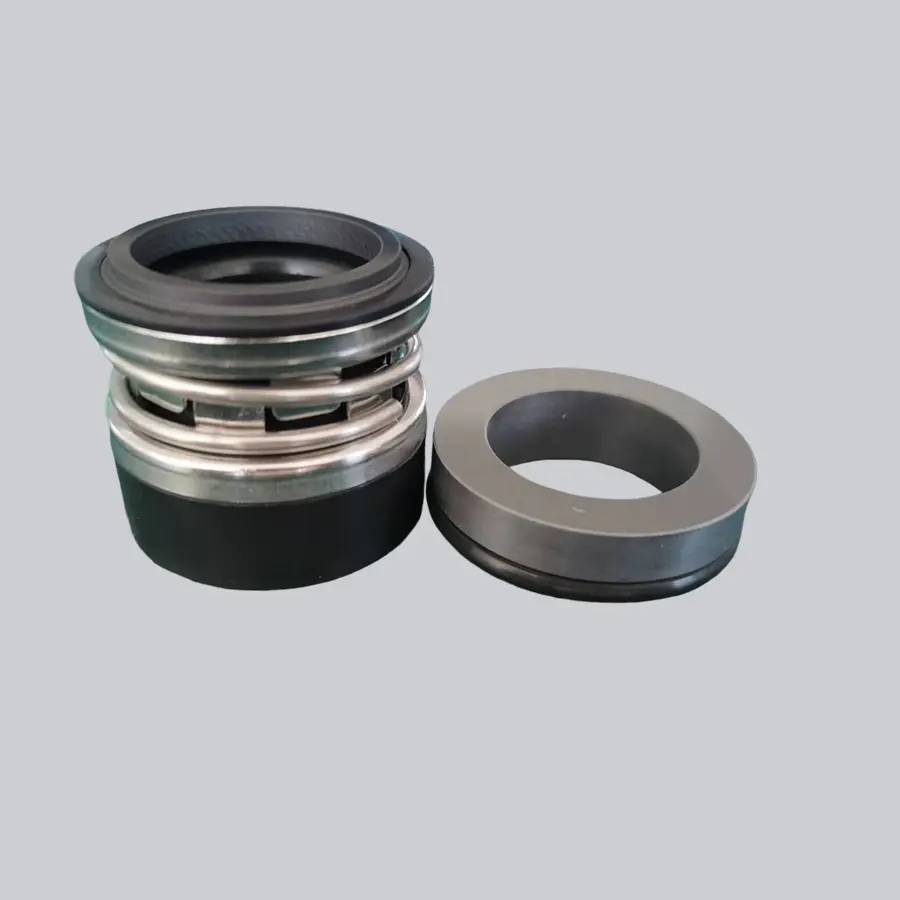
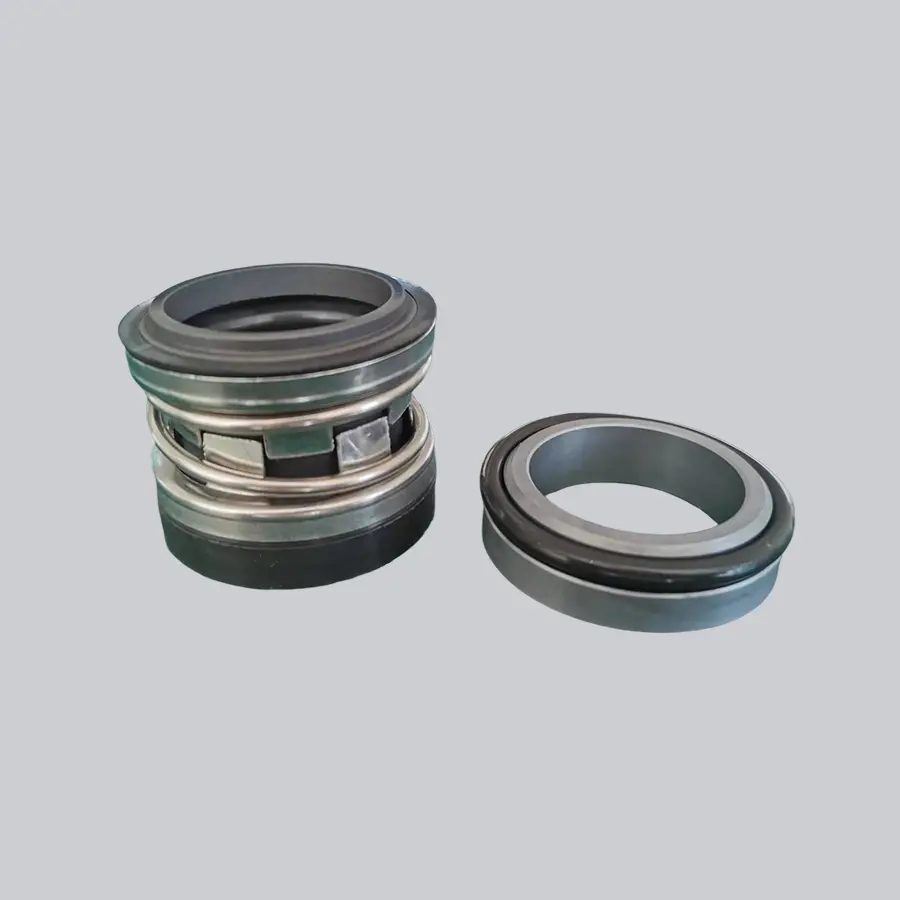
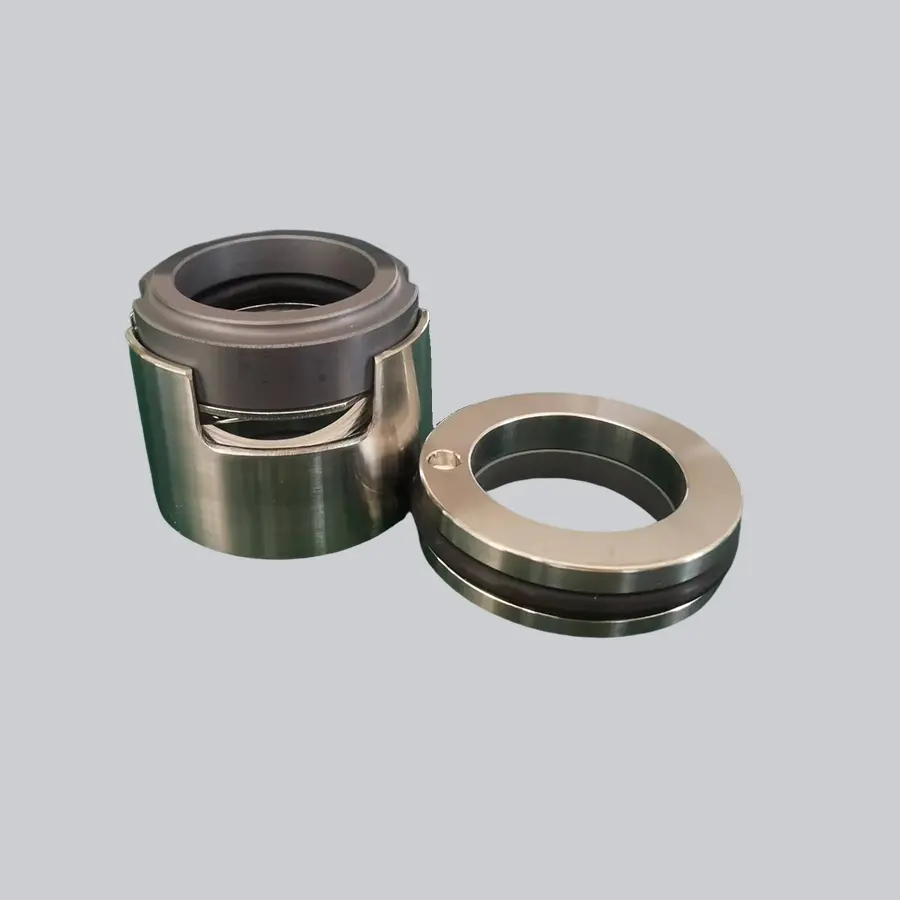
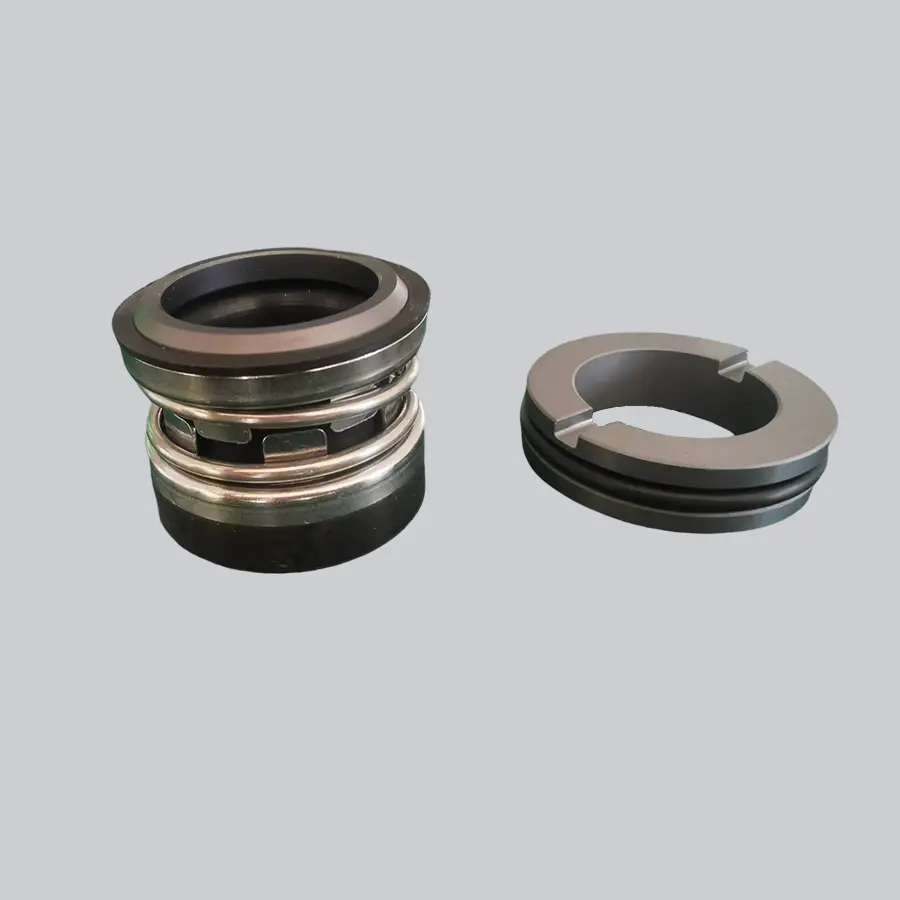
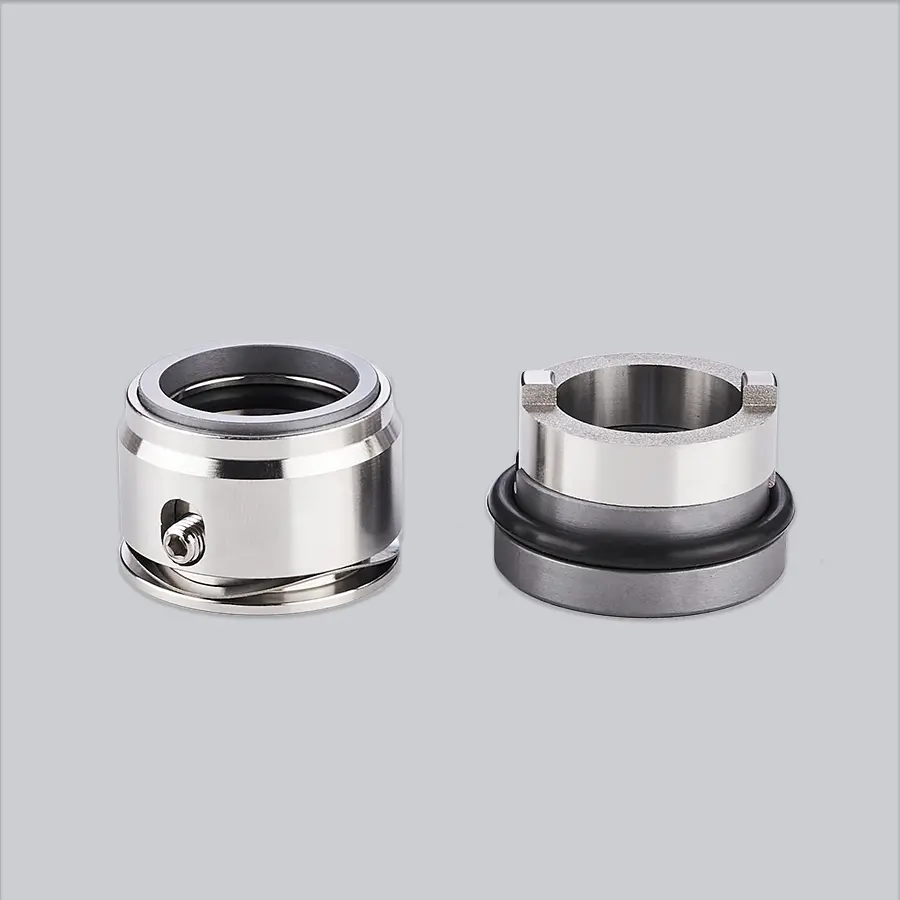
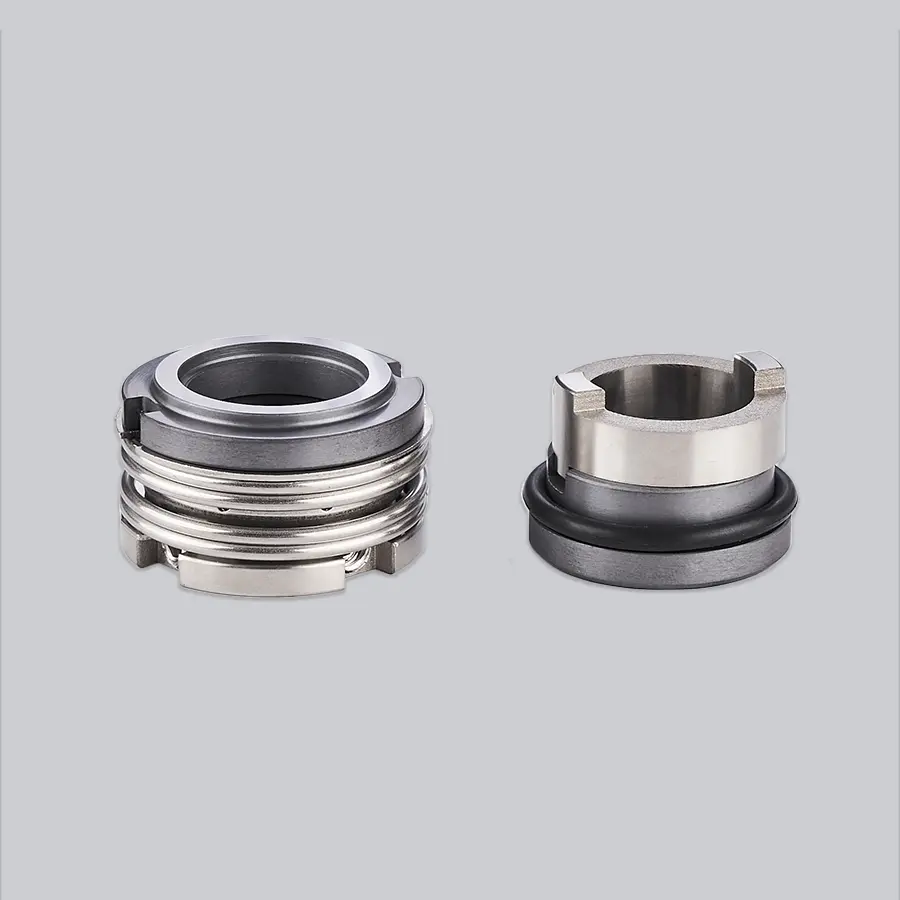
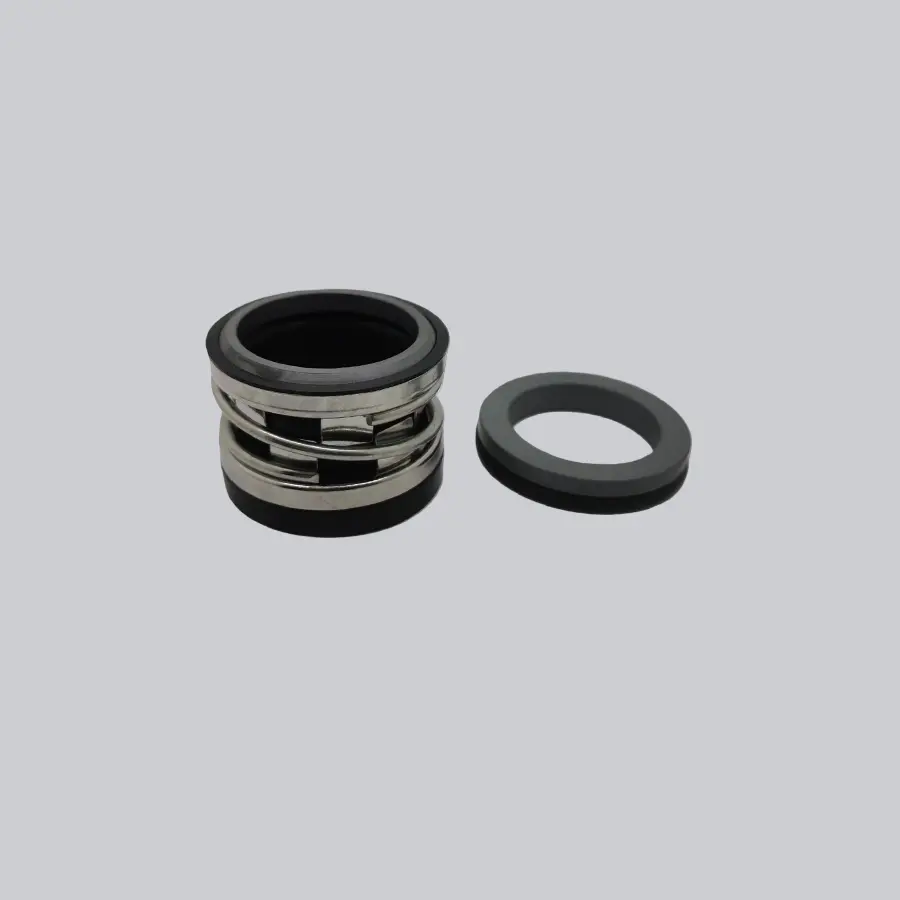
An IMO three-screw pump moves fuel oil, lube oil and hydraulic fluid at pressure, and its shaft seal sees full discharge pressure rather than a low suction head. Most seals in this category are built on a 22 mm shaft for the ACE third-generation pumps, with carbon or stainless faces and O-rings in NBR, EPDM or Viton. A weeping seal usually shows as oil mist on the coupling guard before it shows as a puddle.
Victor covers the ACE, ACG, ACF, ACD, ACP and UCG families through IMO part numbers rather than a generic size chart. The listings run from 190340 and 190497 to the ACG/UCG 045 builds, each matched to the part code on the IMO drawing.
Seal types used on IMO pumps
The ACE third-generation pumps use a compact single seal on a 22 mm shaft, often a rubber bellows or O-ring mounted unit with a carbon seat and stainless face. Part 190497 is the plain 22 mm version; 190495 is the same family in the ACE 025-32 build with the G050 designation.
ACG and UCG pumps take a heavier shaft seal with a clamped seat, listed under 190335, 174102 and the 045 K5/N5/K6/N6/K7/N7 variant 174094. ACD and ACP low-pressure pumps use the XVXX and XTXX patterns, 192691 for ACD and 190810 for the low-pressure build.
How to identify the right replacement
IMO identifies a seal by part number, which is tied to the pump series and build rather than the shaft alone; two seals on the same 22 mm shaft can differ in face material, seat diameter and spring length. Sizing a replacement seal from the drawing is the reliable route when the old number cannot be read.
- Pump series: ACE, ACG, ACF, ACD, ACP or UCG; the series decides housing and seat retention.
- Part number: 190340, 190497, 190495, 194030, 189964, 192691, 190810, 190336, 190335, 174102 or 174094.
- Shaft diameter: 22 mm on the ACE third-generation and most ACG builds listed here; measure clear of the O-ring track.
- O-ring material: NBR for lube oil, Viton for fuel oil and higher temperatures, EPDM only where the fluid allows it.
- Axial float: the seal allows about ±1.0 mm end play, so check rotor end clearance before fitting.
Materials and duty limits
The 22 mm marine and fuel-oil seals are rated from −40 °C to +220 °C depending on the elastomer, up to 25 bar and 25 m/s, with stainless 304 or 316 metal parts. Face options are carbon, SiC and tungsten carbide, and the seat is carbon on some builds and SiC or TC on others.
Fuel oil service usually means Viton rings with carbon against SiC. Lube oil runs cooler and tolerates NBR. Hydraulic fluid at pressure is where TC faces earn their cost, the film is thin and the seal runs near its pressure limit.
What we supply for IMO pumps
Cross-reference notes
Every cross-reference here is an IMO part number from our listings, not a third-party brand. 190497 and 190495 both serve the ACE third-generation pumps: the plain 22 mm seal and the 025-32 build with G050. 194030 and 189964 cover ACE and ACG, 190335 and 174102 cover ACG and UCG, and 174094 narrows to the 045 K5, N5, K6, N6, K7 and N7 builds. ACD work splits between 192691 XVXX and 190810 XTXX.
FAQ
Why does an IMO seal leak at the seat rather than the faces?
The seal runs against full discharge pressure, so a seat that is not fully seated or a hardened O-ring leaks before the faces wear. Check seat bore and O-ring groove first.
Does the seal part number change with the rotor set?
No. The seal is selected by pump series and shaft, the rotor set by its own G012 code and size. They are ordered separately, though both usually go in during the same overhaul.