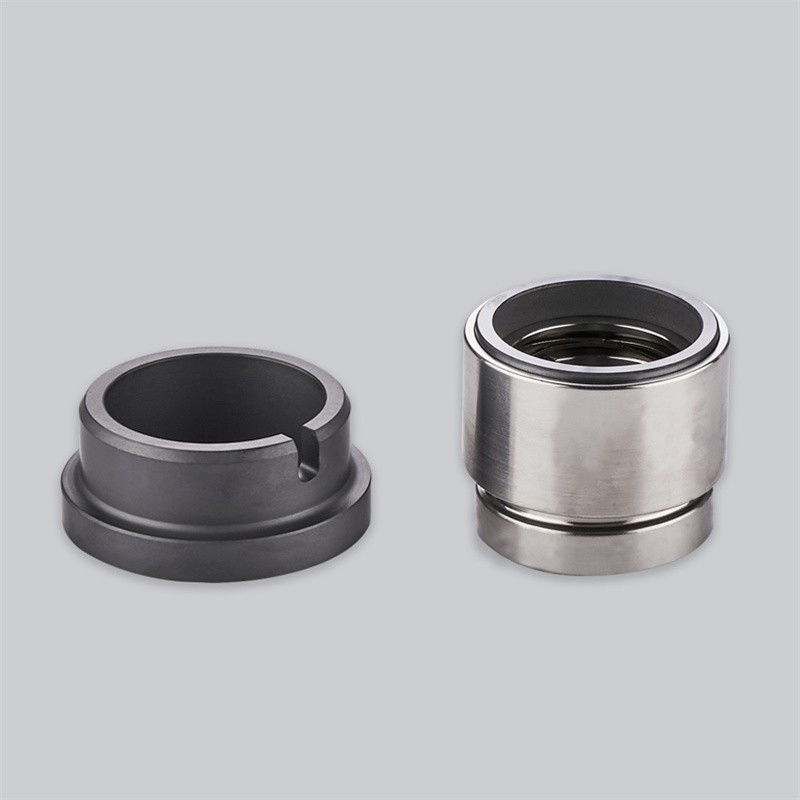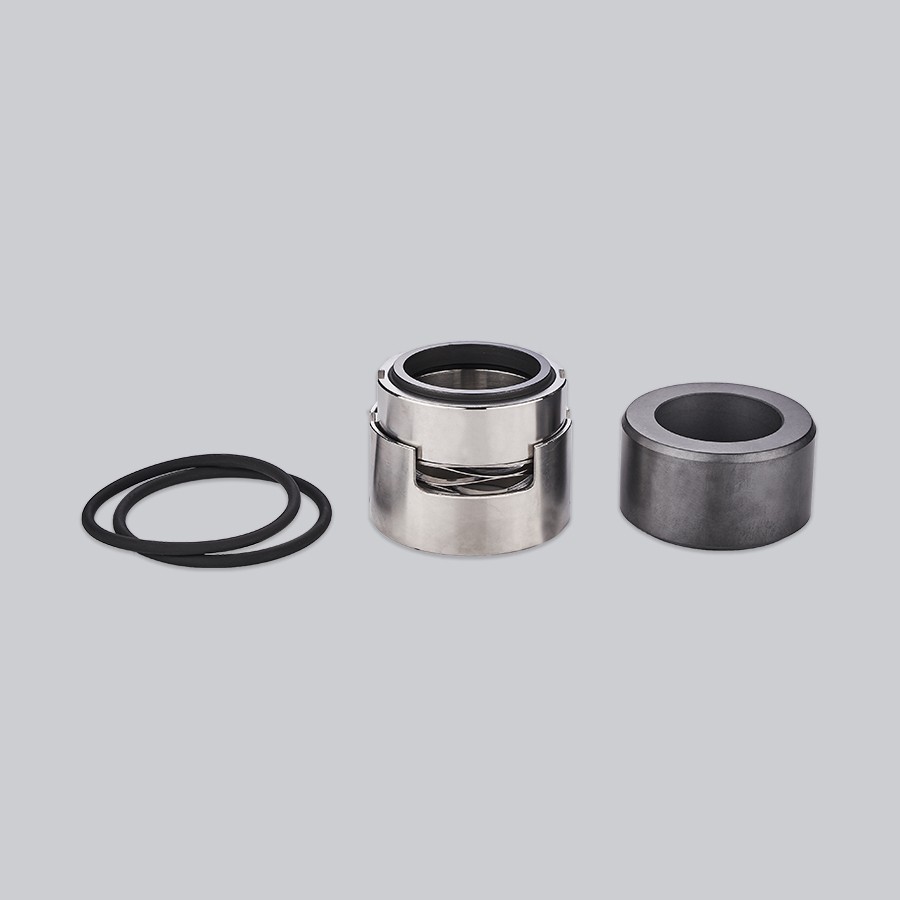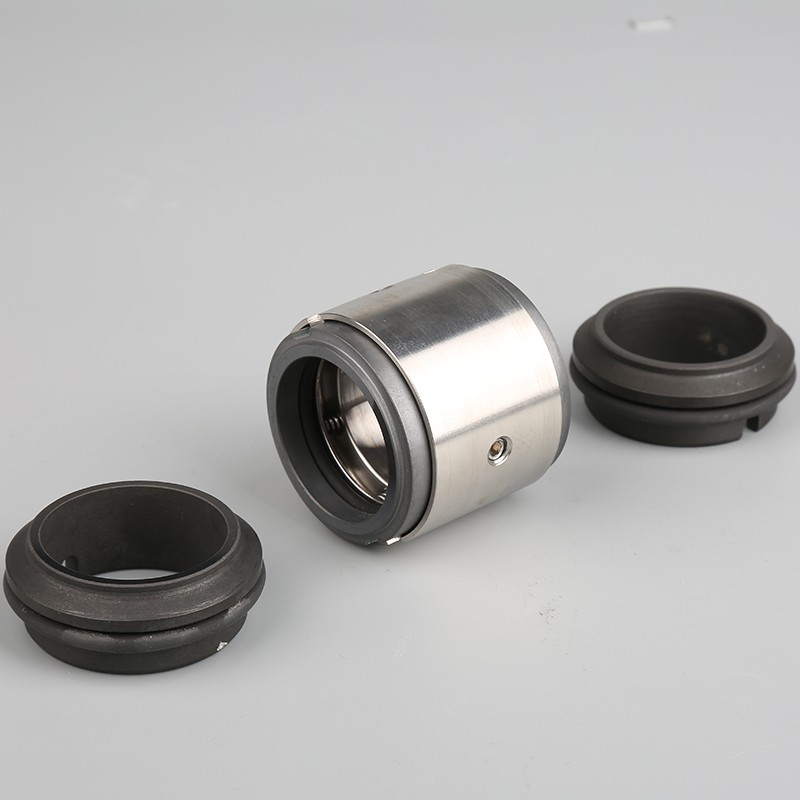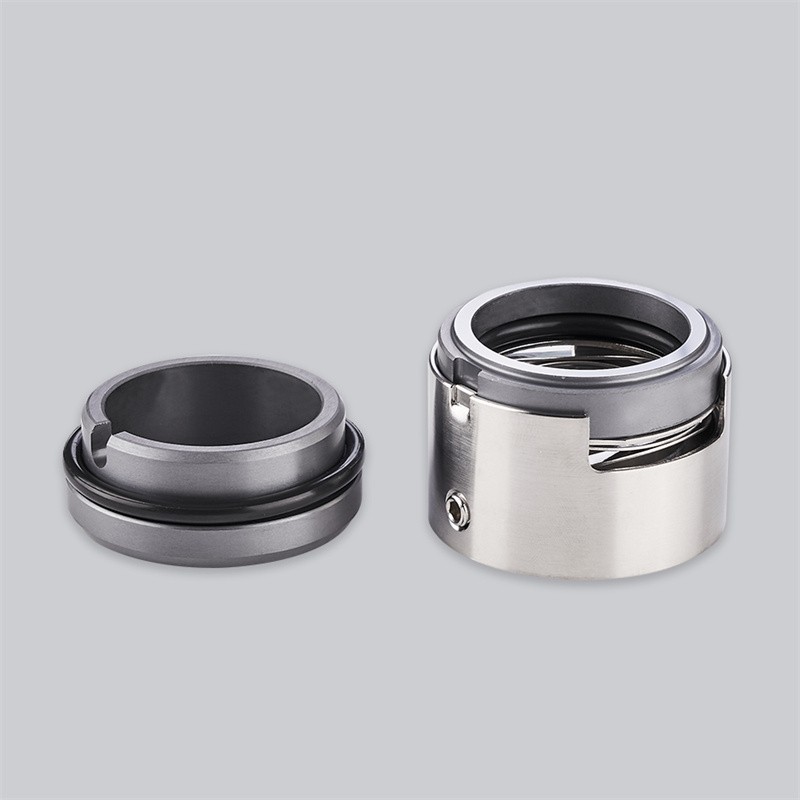
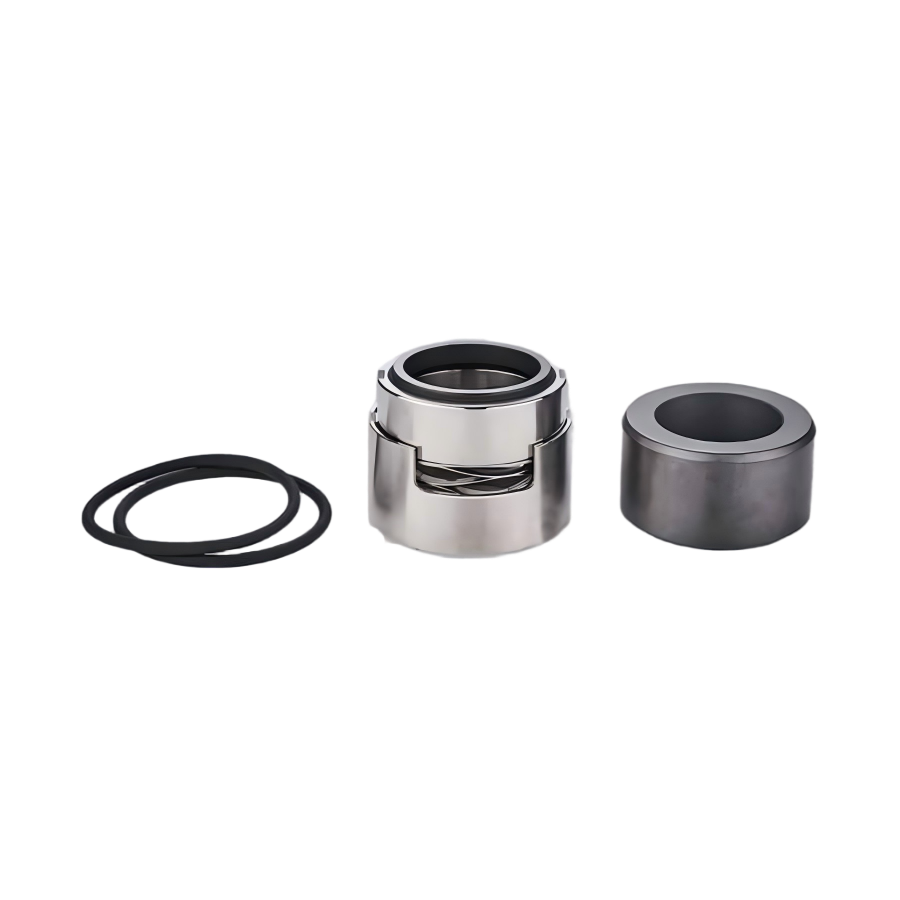
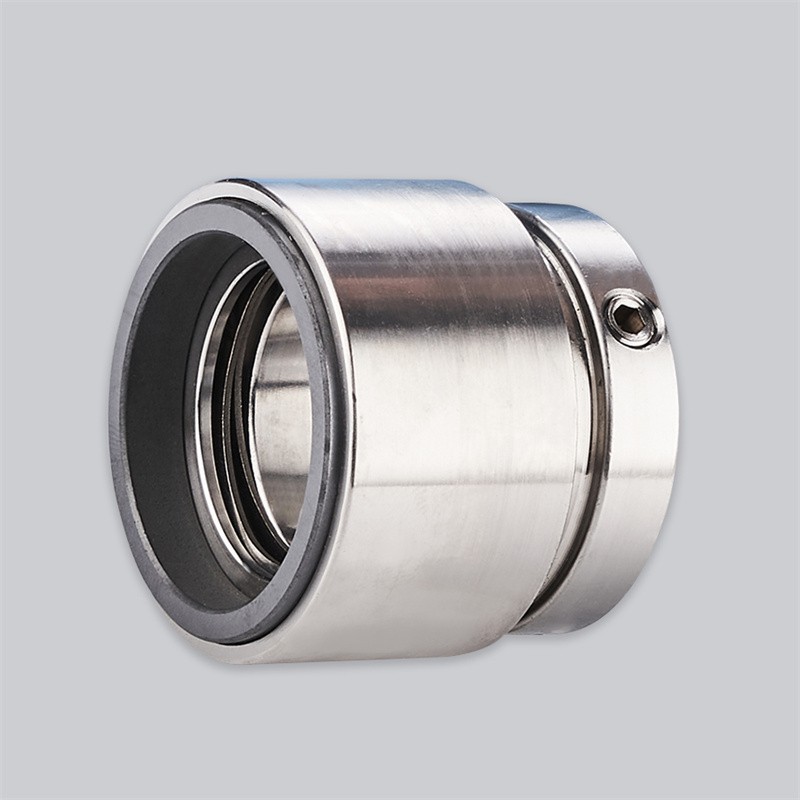
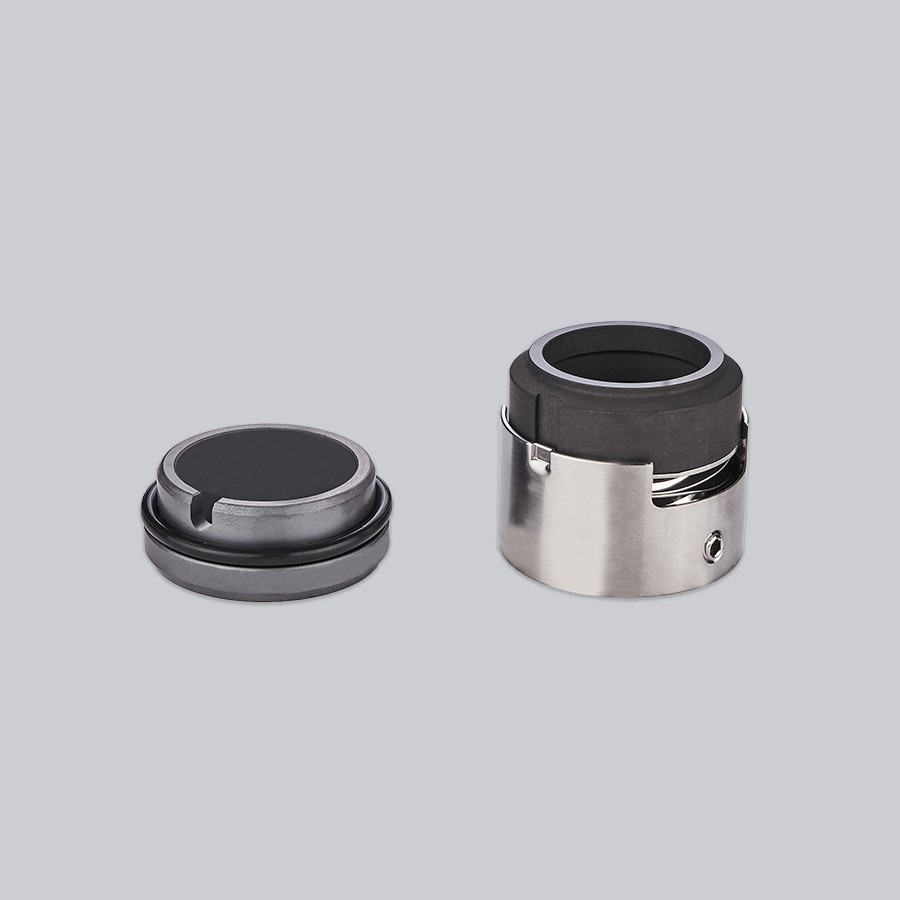
A wave spring mechanical seal uses a single flat strip formed into waves as its spring. The crests load the face at several points around the circumference, so the seal gets distributed load in a much shorter axial space than a coil pack. That combination is why wave springs appear in cartridge seals and in pumps where the chamber is short and the seal has to sit close to the impeller.

The category covers the wave spring references we build: the W1677 sinusoidal seal, the WHJ92N replacement for Burgmann HJ92N, the WM7N water pump seal, the WH7N O-ring component seal and the WM74D double face version. Each uses a wave spring or a nested wave washer to load the faces.

What wave spring mechanical seals cover

The part is stamped from strip and formed so the crests sit between the face ring and the gland. Load depends on strip thickness, wave height and the number of waves, and the spring works over a short deflection. That short travel is enough because faces wear by microns; it is not enough to absorb a badly set working height, so installation depth still matters as much as it does on a coil seal.

Against a pack of coil springs, a wave spring has no individual coils to clog and no spring carrier to machine. It tolerates dirty water better and takes less room. The compromise is a narrower load range: a wave spring is selected for a duty rather than adjusted to one. Where pressure swings widely, the balanced version of the seal body is a better answer than a heavier spring, because extra spring load adds face heat at low pressure.

How to specify

  • Axial space between the face and the gland. This is the number that selects a wave spring seal in the first place.
  • Face load required by the pressure and the face area. Give the duty, not only the shaft size.
  • Shaft and chamber dimensions, plus the gland bolt pattern if the old gland is reused.
  • Fluid cleanliness and temperature. Wave springs tolerate dirty water, not packed solids between the crests.
  • Surface speed at the faces, checked against the model rather than assumed from the pump rpm.
  • The old seal type. Confirm it was a wave spring unit; a coil seal may fit the same chamber and change the axial stack.

Typical applications

  • Vertical multistage pumps with short seal chambers
  • Chiller and cold water circulation pumps
  • Marine cooling and ballast pumps
  • Machine tool high pressure coolant systems
  • Hydraulic power units on compact skids

What we supply in this range

Ordering and cross-reference

The axial gap between face and gland is the number to lead with, followed by the shaft size, chamber depth and the old seal code. A photograph of the old spring helps confirm whether it was a single wave washer or a nested stack. Victor's checks the spring rate against the duty pressure before confirming, since two seals can share a footprint and still load the faces differently. Where the original was a Burgmann or Vulcan wave spring pattern, the code comparison usually settles the match in one pass. It is one of the families in our component mechanical seal supplier range.

FAQ

Why use a wave spring instead of several coil springs?

It gives distributed load in less axial space and cannot clog like a spring pack. The limit is a narrower load range, which is why balanced bodies exist. Our comparison of wave springs versus multiple springs goes through the numbers.

Does a wave spring seal need a flush?

Not always. Clean water duty usually runs without one; dirty or hot product needs a flush for cooling and to keep solids out of the crests.

Wave Spring Mechanical Seal

A Wave Spring Mechanical Seal is a type of seal used in pumps and rotating equipment to prevent fluid leakage. Unlike traditional coil springs, it uses a wave-shaped spring that provides consistent pressure in a compact design. This makes the seal smaller, more efficient, and reliable for marine and industrial applications.

wide range of mechanical seals

At Veekter, we manufacture a full line of mechanical seals, including cartridge seals, elastomer bellow seals, and spring seals. We also produce spare parts such as seal rings, bushings, and thrust discs made from premium materials.

trusted alternatives to top brands

For more than 27 years, Veekter has supplied cost-effective replacements for global brands like EagleBurgmann, John Crane, Vulcan, AES, and Flowserve. Our products are engineered to deliver the same high performance at more competitive prices.

global reliability and fast delivery

Every seal is precision-made and rigorously tested to meet international standards. Shipbuilders and pump manufacturers worldwide trust Veekter for reliable performance, quick delivery, and long-lasting value.

how wave spring mechanical seals work

Wave spring mechanical seals operate by using a wave-shaped spring to maintain consistent contact between the sealing faces. The wave spring is a specialized compression spring with a wavy profile, designed to provide a nearly uniform force across a wide range of deflection.

In a typical configuration, the wave spring is placed behind the primary ring. It applies a controlled axial force that presses the primary ring firmly against the mating ring, ensuring the seal faces remain engaged.

This axial force allows the seal to maintain tight contact even under varying conditions such as temperature changes, pressure fluctuations, and mechanical vibrations. By keeping the sealing faces closely pressed together, the wave spring prevents leakage and ensures reliable performance between the rotating and stationary components of the mechanical seal.

advantage of wave spring mechanical seal

space-saving design

The wave-shaped spring delivers consistent force while taking up less axial space compared to traditional coil springs. This compact structure is especially valuable in marine and industrial pumps where equipment space is limited. It allows for easier installation, better pump integration, and improved efficiency without compromising sealing performance.

extended service life

By applying uniform pressure on the sealing faces, the wave spring reduces friction, heat generation, and uneven wear. This controlled load distribution helps extend the life of the seal and pump components. In practice, it means fewer replacements, lower maintenance costs, and greater reliability for continuous operations in demanding environments.

misalignment tolerance

Wave spring seals are engineered to compensate for slight shaft misalignments that often occur during operation. This tolerance reduces the risk of leaks and mechanical stress on the sealing faces. By maintaining proper contact between the faces, the wave spring reduces the likelihood of excessive wear or damage caused by uneven contact or vibration.

wave spring mechanical seal applications

Veekter provides high-quality solutions for a wide range of applications. Every seal undergoes 100% dimensional inspection and pressure leakage testing, with sample checks during production, ensuring consistent reliability and performance.

marine pumps

Wave spring seals are installed on the pump shaft to prevent water leakage in ballast, cooling, and bilge systems. The spring maintains even pressure on the sealing faces, ensuring reliable operation under vibration, misalignment, and harsh seawater conditions.

For centrifugal pumps, these seals secure the interface between the rotating shaft and stationary parts. They reduce friction and wear while maintaining tight contact, ensuring efficient fluid transfer and extending the pump’s service life during high-speed operation.

Wave spring seals are applied in mixers, reactors, and chemical transfer pumps to prevent leaks of corrosive or aggressive fluids. They maintain stable sealing under pressure and temperature changes, protecting both the equipment and personnel from hazardous fluid exposure.

In food and beverage pumps, wave spring seals prevent leakage in dosing, transfer, and cleaning systems. The seals provide consistent face contact, ensuring hygienic operation while resisting contamination, wear, and frequent temperature or pressure variations.

wave spring mechanical seal installation guide

At Veekter, we do more than manufacture high-quality mechanical seals—we also provide expert guidance to help customers achieve reliable performance. Our team supports you through every step of installation, ensuring correct procedures, reduced downtime, and long-lasting seal service.

prepare the equipment

Before installation, make sure the pump is fully shut down, isolated, and depressurized. Clean the shaft, sleeve, and stuffing box carefully, and check the shaft surface for burrs or scratches that could damage the seal.

inspect the seal parts

Unpack the seal gently and examine all components for visible defects. The sealing faces must be smooth and free from scratches. Apply a thin layer of clean lubricant to O-rings and sealing faces to ease assembly.

install the stationary seat

Insert the stationary seat, or mating ring, into the gland or stuffing box. Ensure it is clean, squarely aligned, and fully seated. Handle with gloves to avoid contaminating the sealing surface during installation.

mount the rotating assembly

Carefully slide the rotating unit, including the primary ring and wave spring, onto the shaft. Position it at the correct axial location shown in the drawing, making sure the spring sits properly behind the sealing face.

align and secure the seal

Fix the rotating assembly in place by tightening the set screws evenly. Install the gland plate with bolts, tightening them in a crisscross pattern. Recheck alignment so that the sealing faces remain parallel and square.

perform final verification

Turn the shaft by hand to confirm smooth movement without binding. Recheck all bolts and fasteners for tightness. During startup, run at low speed first, inspect for leaks, and then increase to full operating conditions.

wave spring mechanical seal faq

Related topics

Acquire all kinds of knowledge from professional China pump mechanical seal manufacturer

Why choose a wave spring over multiple springs in mechanical seals?

For most modern mechanical seal designs, wave springs are the preferred axial loading solution over multiple coil springs, as they deliver a more compact profile, more uniform face loading, higher reliability, and lower total installed cost. Spring selection is a critical performance decision — seal face loading directly impacts leakage
Read More »

When should you use a cartridge mechanical seal?

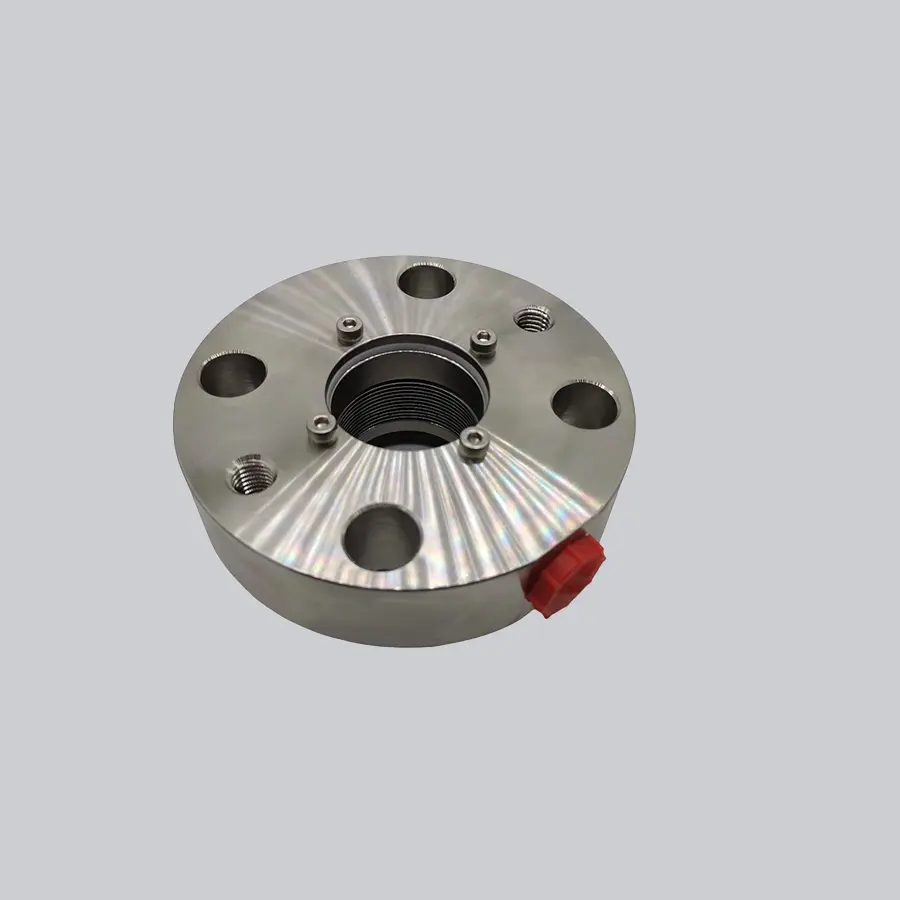
Cartridge mechanical seals are the preferred choice when installation reliability, minimal downtime, and consistent performance in critical applications are top priorities. A cartridge seal is a factory-preassembled, self-contained module: all components — seal faces, springs, sleeve, and gland — are aligned and set at the factory, so the unit arrives
Read More »

Metal Bellow Seals vs Standard Seals: What’s Better?

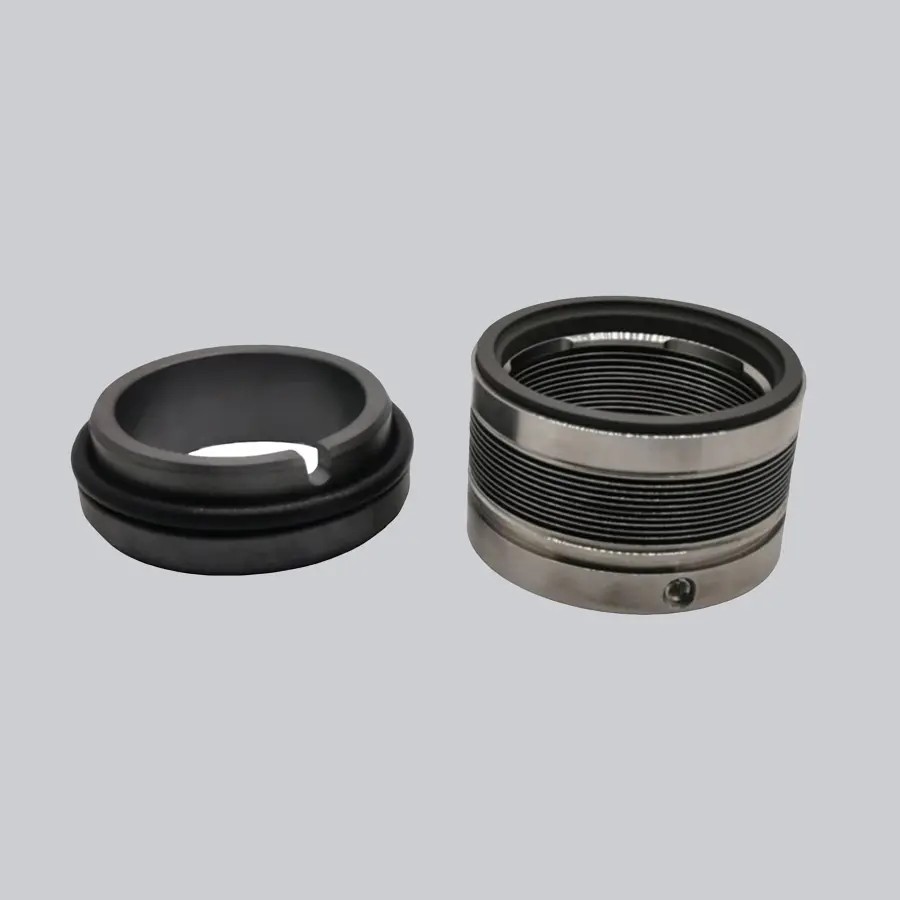
Metal bellow seals are the clear choice for high-performance, extreme-condition service, while standard pusher seals deliver reliable performance at lower cost for moderate, general-purpose applications. This core tradeoff defines nearly every mechanical seal selection decision. Neither design is universally superior. Each serves a distinct duty range, and matching the seal
Read More »

When does a component seal still make sense?

Component mechanical seals remain the optimal choice in three common scenarios: when equipment was originally engineered for component-style seals and a like-for-like replacement is required; when a compact, integrated design with high reliability and simplified assembly is a priority; and when upgrading to a cartridge seal would add unnecessary complexity


Read More »

What are the three types of mechanical seals?

1.Cartridge mechanical seals
Pre-assembled units that combine the seal, gland, and sleeve.
Easy to install and replace, reducing installation errors.
Commonly used in pumps where reliability and maintenance efficiency are important.

2. Elastomer Bellow Mechanical Seals
Use a flexible elastomer bellow instead of a traditional spring to maintain face contact.
Excellent for handling corrosive or abrasive fluids and accommodating misalignment.
Often applied in chemical and marine pumps.

3. Spring Mechanical Seals
Use one or more springs (coil, wave, or garter) to maintain axial pressure on the seal faces.
Suitable for a wide range of pressures and temperatures.
Can handle variable operating conditions and are commonly used in industrial and marine pumps.

The difference between coil springs and wave springs mainly lies in their shape, size, force distribution, and application efficiency:

Shape and Structure
Coil Spring: A traditional helical spring, with continuous coils that compress or extend along its axis.

Wave Spring: A flat wire formed into a wavy pattern, creating multiple contact points in a compact, single-turn design.

Space Efficiency
Coil Spring: Requires more axial space to achieve the same deflection and force.

Wave Spring: Can provide the same force in much less space, making it ideal for compact mechanical seals.

Force Distribution
Coil Spring: Force is concentrated along the coils and may vary slightly as it compresses.

Wave Spring: Delivers more uniform and consistent axial force across the sealing face, improving contact stability.

Applications
Coil Spring: Common in general-purpose mechanical seals, simple pumps, and applications where space is not limited.

Wave Spring: Preferred in marine, chemical, and industrial pumps where compact design, consistent pressure, and longer seal life are critical.

In short, wave springs are smaller, more efficient, and provide more even force, making them ideal for high-performance mechanical seals.

A wave washer (also called a wave spring washer) should be used when you need consistent axial load in a compact space while allowing for some deflection. Its applications are ideal in situations where traditional coil springs are too bulky or do not provide uniform force.

Key Situations to Use a Wave Washer:

Space-Limited Assemblies
When axial space is restricted, such as in mechanical seals, bearings, or small pump shafts, a wave washer can provide the required spring force in a much smaller profile.

Maintaining Consistent Pressure
When consistent contact force is needed, like pressing a seal face or bearing against a mating surface, a wave washer ensures even load distribution.

Compensating for Misalignment or Thermal Expansion
Wave washers can absorb minor axial movement caused by shaft misalignment, thermal expansion, or component wear, maintaining reliable sealing or clamping.

Reducing Vibration or Noise
The washer can act as a damping element, reducing vibration in rotating assemblies like pumps, compressors, or small motors.