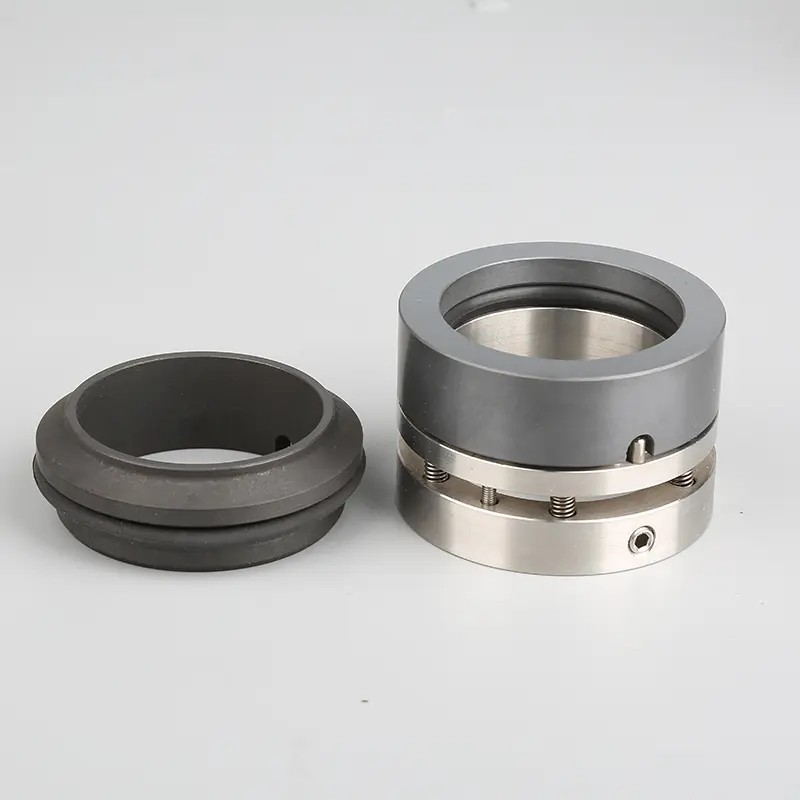
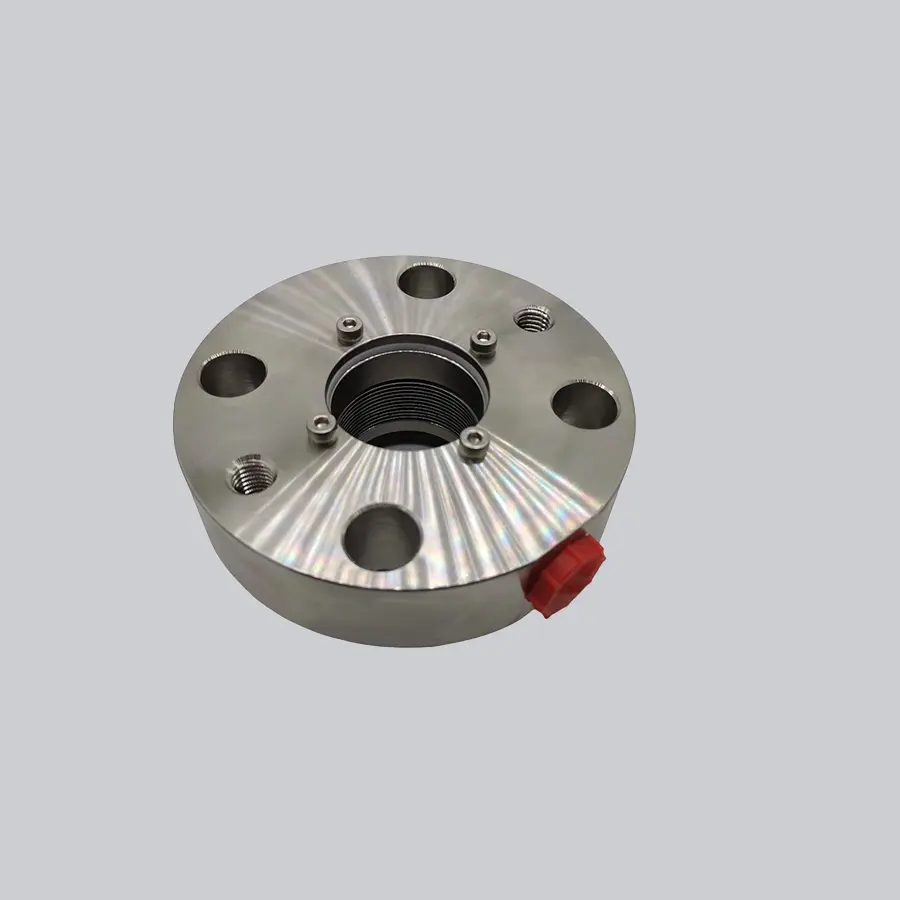
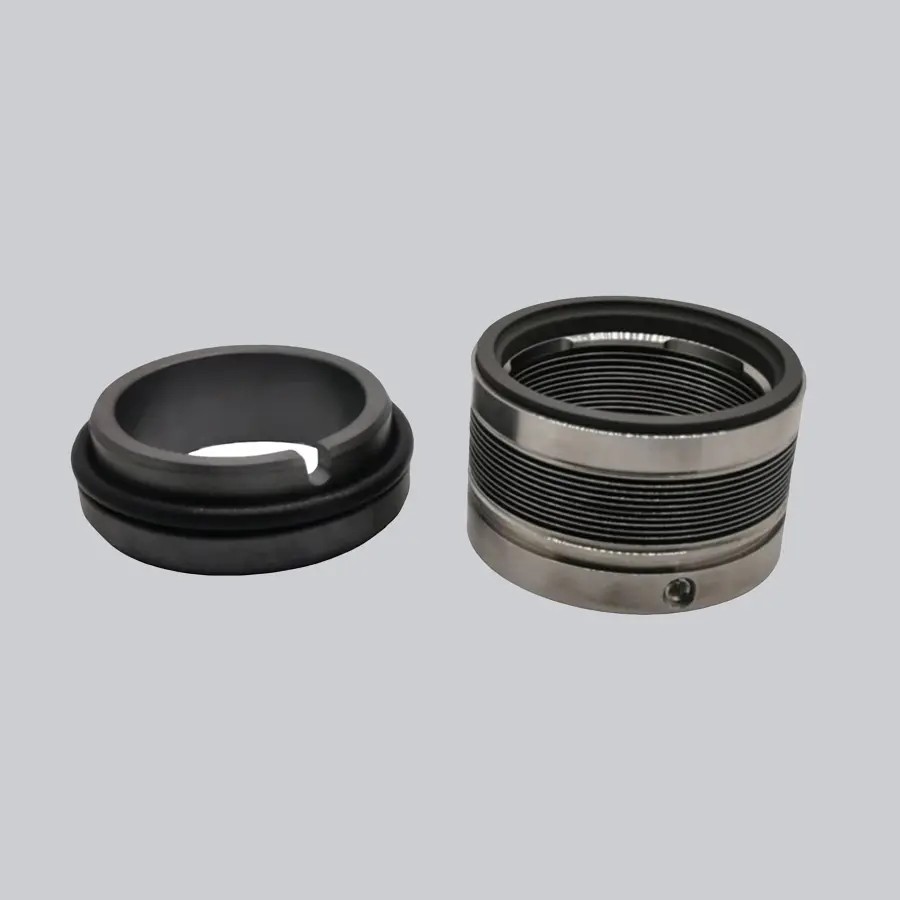
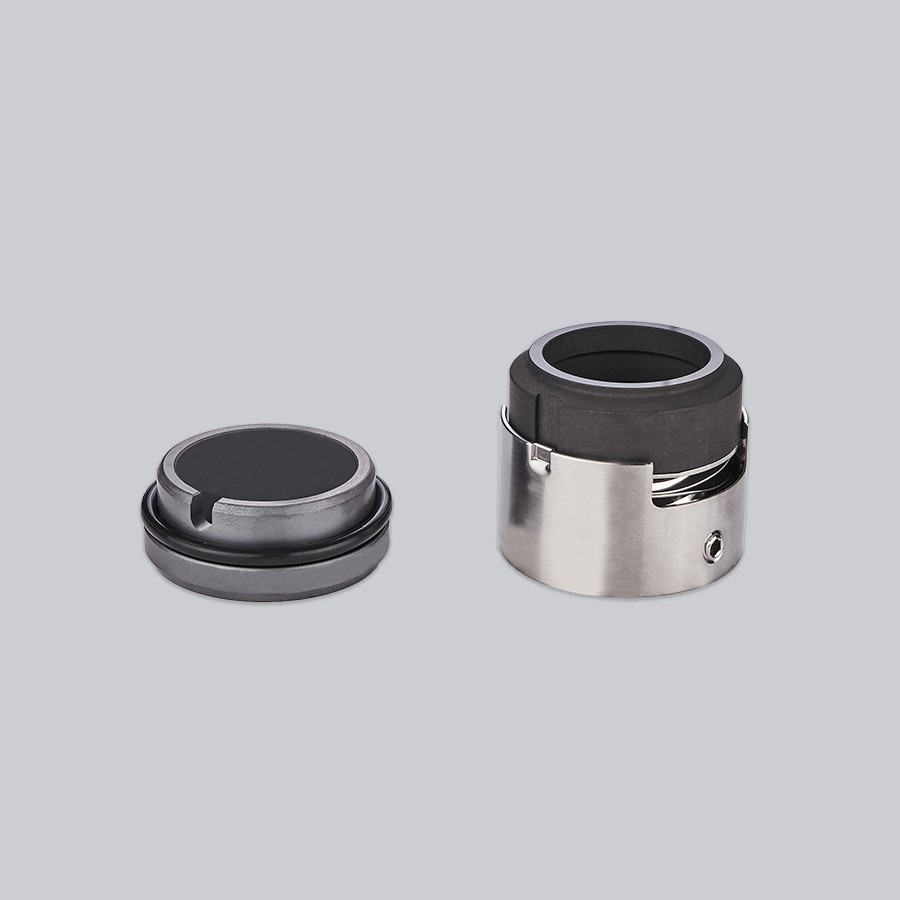
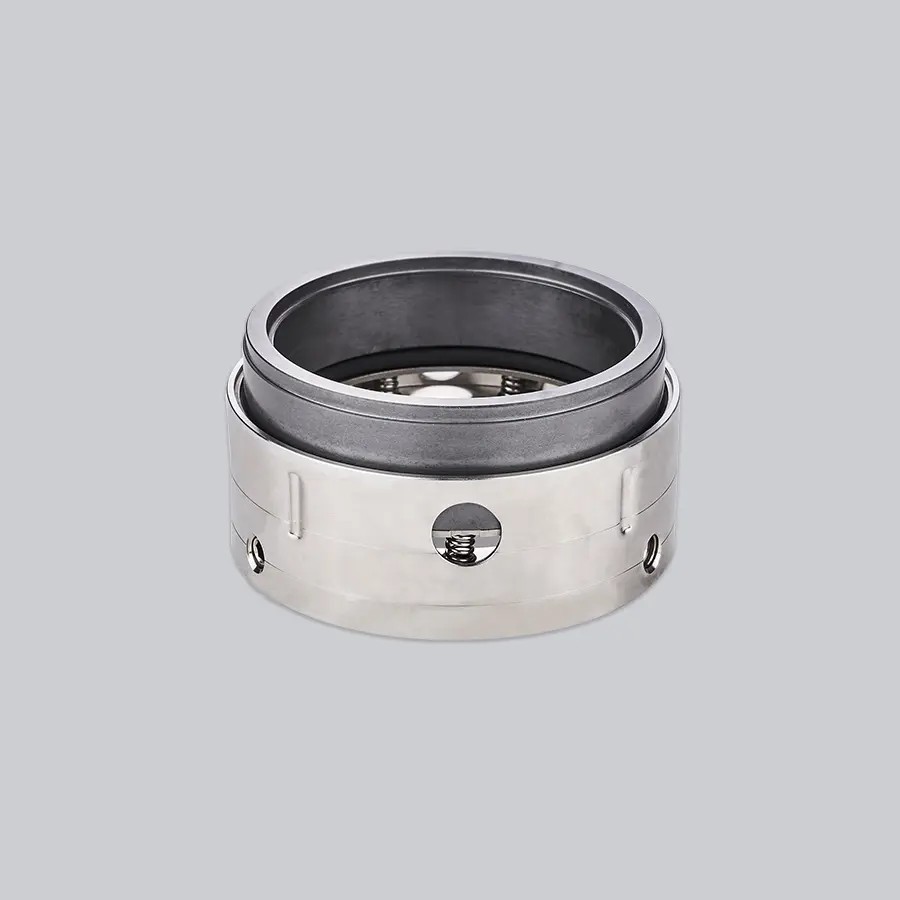
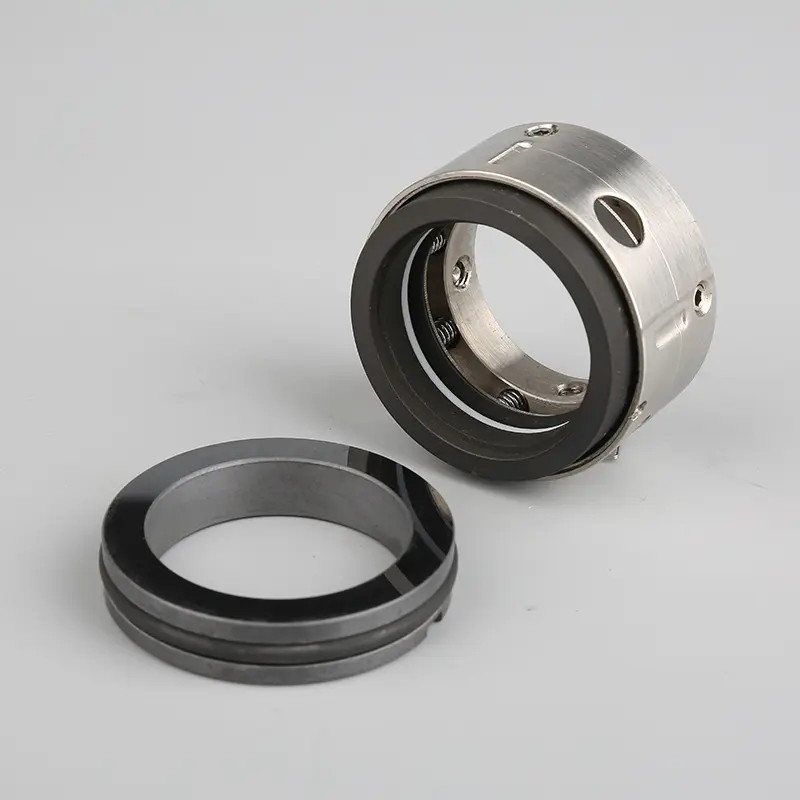
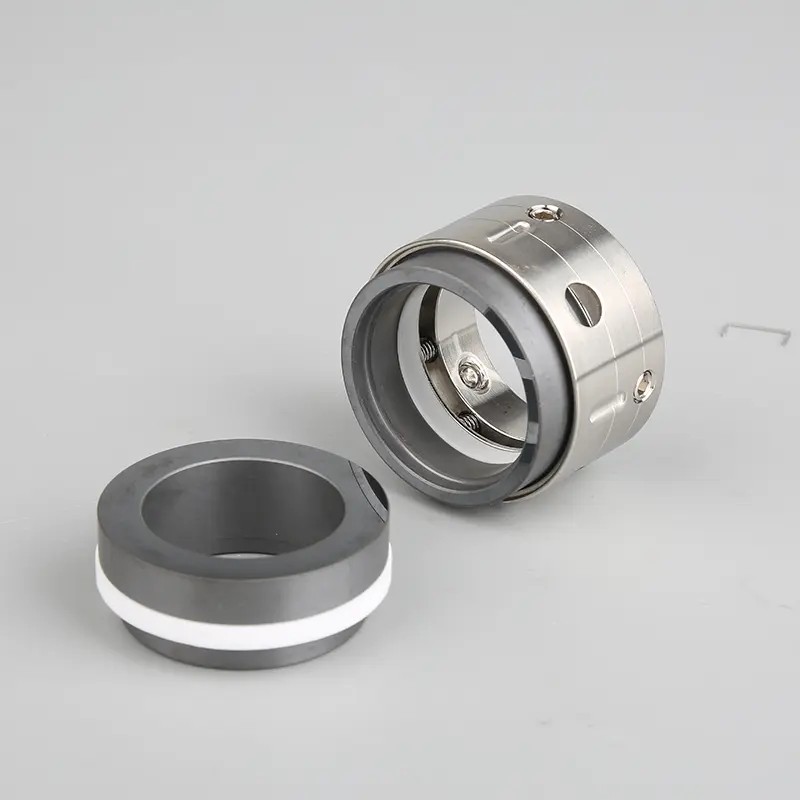
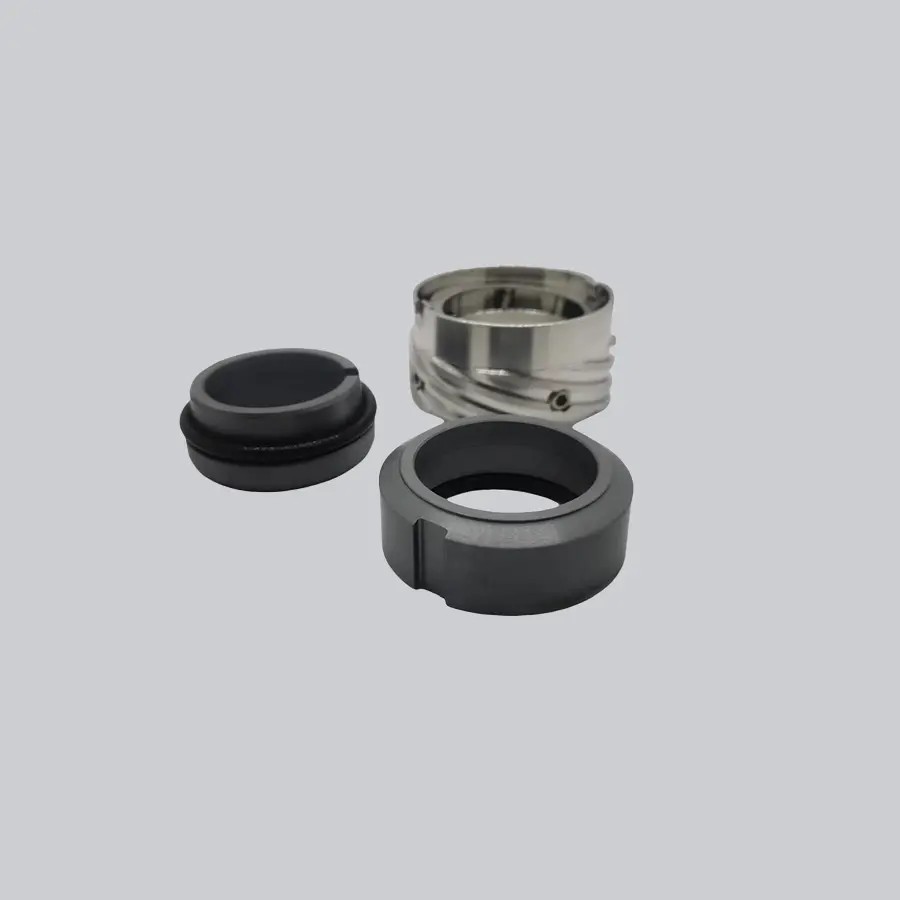
A multi spring mechanical seal spreads the closing load across a ring of small springs instead of one central coil. Each spring carries a fraction of the total, so face pressure stays even around the circumference and the design scales to larger shafts and higher pressures without a heavier single spring. The spring pack sits behind the rotating face, inside the gland.

This category holds the multi-spring references we build: the W58U O-ring pusher seal and the W59U PTFE wedge seal in general purpose lengths, the W8T replacement for the John Crane 8-1T, the WRO for Flowserve RO pumps and the H75F for water pump duty. All are pusher seals.

What multi spring mechanical seals cover

Springs sit in a carrier behind the face and press through a disc or directly onto the face ring. Load is even, but in most designs the springs are exposed to the product. Crystallising, fibrous or particle-laden fluids pack the coils and freeze the axial movement, so a multi-spring seal in dirty service needs a flush or a different family. That single point decides more installations than the pressure rating does.

The design also sets how much pressure an envelope can carry. Balanced versions reach the top of our range, 25 bar depending on model, and many bodies exist in both balanced and unbalanced form. Shaft speed acts the same way through surface speed at the faces, up to 25 m/s on the smaller sizes. Above either limit the faces heat, the film breaks down and the carbon ring shows a matt, crazed track rather than a polished one.

How to specify

  • Shaft diameter, chamber bore and depth. Multi-spring bodies are longer than single spring units, so depth is checked first.
  • Pressure at the seal and the balance ratio required. State whether the duty is steady or cycles through pressure swings.
  • Fluid cleanliness. Solids, fibres or crystallisation rule out exposed springs unless a flush is fitted.
  • Speed and surface speed, taken at the face diameter rather than the shaft.
  • Face and elastomer materials, matched to the product and its temperature.
  • Gland bolt pattern and port positions if the existing gland is to be reused.

Typical applications

  • Boiler feedwater and condensate pumps
  • High pressure process water in chemical plants
  • Cooling water circulation on petrochemical units
  • Pulp and paper process pumps
  • High pressure descaling and jetting pumps

What we supply in this range

Ordering and cross-reference

Pressure comes first on a multi-spring enquiry: give the peak and the usual running point, then the shaft diameter, chamber depth and fluid. For multi-spring seals the spring count and face diameter must match the body, so a photograph of the old unit with the springs visible saves time. Victor's checks the balance ratio against the stated pressure before quoting, and asks for the flush arrangement when the product is dirty. Cross-references to Burgmann, John Crane, Flowserve and AES codes are checked against the drawing rather than accepted at face value. The seal sits in the component seal range with the single spring and bellows families.

FAQ

Why are multiple springs used at all?

They spread load evenly on larger faces and allow higher pressure in a compact body. The trade-off is sensitivity to dirty product, which can seize the springs.

Can I fit a multi-spring seal where a single spring was used?

Only if the chamber depth allows the longer body and the product is clean enough for exposed springs. Our guide to why multi springs are used in mechanical seals covers the trade-offs.

Multi Spring Mechanical Seal

A multi spring mechanical seal is engineered for stable, consistent performance across a wide range of pump applications. Its multiple small springs apply an even, uniform face load, ensuring better balance and higher pressure capability than traditional single-spring designs. This uniform force distribution helps reduce wear, maintain reliable sealing, and extend overall service life.

strict quality control process

Every mechanical seal undergoes full dimensional inspection, pressure-leak testing, and sample checks during production. Our rigorous QC workflow ensures stable, repeatable performance even in demanding marine and industrial environments.

large inventory for reduced lead time

With extensive stock of finished seals and spare components, we keep orders moving quickly. This strong inventory capability minimizes production delays and helps shipbuilders and pump manufacturers maintain uninterrupted operation.

engineered for long-term durability

From carbide materials to precision-machined metal parts, every component is designed for long service life. Veekter seals maintain reliable performance under high pressure, corrosive media, and continuous-duty applications.

how does multi spring mechanical seal work

A multi-spring mechanical seal is composed of several key components: a rotating ring, a stationary ring (seat), multiple springs, a spring seat, and auxiliary sealing elements (such as O-rings). During operation, the rotating ring (mounted on the shaft) and the stationary ring (fixed in the housing) are held together by the balanced force of many small springs. These springs apply uniform pressure around the seal’s circumference, which helps maintain consistent contact between the seal faces.

When the pump is running, the fluid’s pressure also acts on the seal faces. The springs compensate for pressure fluctuations, wear, and axial shaft movements, pushing the faces together to maintain a tight seal. As wear occurs, the springs allow a small amount of axial movement (via the spring seat), preserving proper face contact and preventing leakage.

At the same time, a thin film of fluid typically forms between the rotating and stationary faces, providing hydrodynamic lubrication. This film reduces friction and heat, extending the life of the seal. The multi-spring design helps ensure that force distribution remains even, so the lubrication film stays stable.

Features of multi spring mechanical seal

uniform face loading for stable sealing

Multi-spring design in mechanical seals evenly distributes pressure on seal faces, ensuring balanced load during pump use. This uniform force reduces localized wear, enhances lubrication, and enables reliable sealing even at high pressures, extending service life and lowering failure risk for marine and industrial pumps.

compact design for easy installation

Multi-spring mechanical seals feature a compact rotary assembly, often secured by snap rings or modular parts. This simplifies installation and allows quick field servicing without full pump disassembly. Seal faces and secondary elements are easily replaceable, cutting downtime and repair costs for vessel operators and process plants.

versatile material option

Multi spring mechanical seals offer diverse face and secondary seal materials, like silicon carbide, tungsten carbide, and PTFE. This adaptability suits pumps handling clean liquids, corrosive chemicals, or refrigerants. By choosing corrosion-resistant materials and precision-machined parts, the seal can be tailored to specific temperature, pressure, and media needs.

multi spring mechanical seal applications

Veekter delivers premium sealing solutions for diverse pump and industrial applications. Each seal is subjected to complete dimensional checks and pressure-leak testing, with additional sample inspections throughout production, guaranteeing dependable performance and consistent quality.

water pump seal

In water pumps, such as circulation, cooling, or ballast pumps, multi spring mechanical seals offer high reliability. This design provides strong reliability even when the fluid contains particulates, and the balanced load helps minimize face wear during prolonged operations.

Multi‑spring mechanical seals are broadly applied in oil pump systems—especially in applications within the petrochemical, refinery, and lubrication sectors. The coil springs in a multi‑spring seal distribute load evenly, which helps prevent face distortion and reduces leakage risk under high-pressure oil environments. Moreover, because the springs are isolated from the pumped medium, the seal design often allows for reduced flushing and less dilution of the product.

Multi‑spring mechanical seals are well suited for food and pharmaceutical pump applications due to their ability to meet strict sanitary and hygiene requirements. Components like O-rings and springs can be made from PTFE, reducing the risk of contamination. Multi-spring seals support pharmaceutical applications thanks to balanced loading, robust face materials, and compact design.

For chemical pumps used in process or transfer applications, multi spring mechanical seals handle corrosive or aggressive fluids like acids, alkalis, and solvents. These seals ensure consistent closing force under fluctuating pressure or temperature, improving stability and reducing the risk of leakage in chemical transfer or reactor systems.

multi spring mechanical seal materials

To ensure long-term reliability and stable sealing performance, Victor selects only high-quality materials for multi spring mechanical seals. Depending on the pump medium, temperature, and working conditions, mechanical seals can be configured using combination of the following materials.

seal face materials

Carbon: Carbon is widely used for seal faces thanks to its excellent self-lubricating properties and low friction. It performs well in moderate temperatures and is compatible with a broad range of fluids, making it ideal for general-purpose applications.
Silicon Carbide (SiC / RBSiC): Silicon carbide offers exceptional hardness, thermal conductivity, and wear resistance. Reaction-bonded SiC (RBSiC) delivers even higher strength and improved chemical resistance, making both versions suitable for abrasive or corrosive media.
Tungsten Carbide (TC): Tungsten carbide provides extremely high wear resistance and is ideal for demanding conditions involving high pressure or slurry. It withstands heavy mechanical loads and offers long service life in harsh industrial environments.

secondary seal materials

Viton (Fluorocarbon Rubber): Viton provides outstanding resistance to oils, fuels, and high temperatures. It is a common choice for mechanical seals operating in aggressive chemical or hydrocarbon-rich environments.
PTFE-Coated Viton: This material combines Viton’s chemical resistance with a PTFE coating that reduces friction and improves durability. It is used when additional protection is required in highly corrosive media.
Ethylene-Propylene-Diene Rubber (EPDM): EPDM performs well in water, steam, and many polar fluids. It is resistant to aging, ozone, and weathering, making it suitable for sealing applications in water treatment and general industrial use.
Nitrile Rubber (NBR): NBR offers strong resistance to oils, fuels, and lubricants. It is a cost-effective option for mechanical seals used in petroleum-based fluids and moderate temperature environments.

springs and metal components materials

316 Stainless Steel: 316 stainless steel provides excellent corrosion resistance, especially in chloride-rich or acidic environments. It is commonly used for springs and metal hardware exposed to aggressive media.
304 Stainless Steel: 304 stainless steel is durable, economical, and resistant to oxidation and mild corrosion. It is suitable for metal components in standard industrial sealing applications.

Multi spring mechanical seal faq

Related topics

Acquire all kinds of knowledge from professional China pump mechanical seal manufacturer

Why choose a wave spring over multiple springs in mechanical seals?

For most modern mechanical seal designs, wave springs are the preferred axial loading solution over multiple coil springs, as they deliver a more compact profile, more uniform face loading, higher reliability, and lower total installed cost. Spring selection is a critical performance decision — seal face loading directly impacts leakage

Read More »

When should you use a cartridge mechanical seal?

Cartridge mechanical seals are the preferred choice when installation reliability, minimal downtime, and consistent performance in critical applications are top priorities. A cartridge seal is a factory-preassembled, self-contained module: all components — seal faces, springs, sleeve, and gland — are aligned and set at the factory, so the unit arrives

Read More »

Metal Bellow Seals vs Standard Seals: What’s Better?

Metal bellow seals are the clear choice for high-performance, extreme-condition service, while standard pusher seals deliver reliable performance at lower cost for moderate, general-purpose applications. This core tradeoff defines nearly every mechanical seal selection decision. Neither design is universally superior. Each serves a distinct duty range, and matching the seal

Read More »

When does a component seal still make sense?

Component mechanical seals remain the optimal choice in three common scenarios: when equipment was originally engineered for component-style seals and a like-for-like replacement is required; when a compact, integrated design with high reliability and simplified assembly is a priority; and when upgrading to a cartridge seal would add unnecessary complexity

Read More »

What is the spring pressure for a mechanical seal?

The spring pressure ensures proper contact between the seal faces. For most pump mechanical seals, the specific spring pressure ranges from 1.3 to 2.8 kgf/cm², depending on operating conditions, face materials, and auxiliary seal design.

For single-spring seals, the spring is typically compressed 50–70%, while multi-spring (disc spring) seals are compressed around 90%. Cartridge seals come pre-set, while non-cartridge seals may require adjustment based on the pump type. Correct spring compression ensures reliable sealing, minimized wear, and optimal performance.

The spring in a mechanical seal plays a vital role: it keeps the rotating and stationary faces in constant contact, even when pressure is low or the pump is stopped. It compensates for wear on the seal faces and for small shaft movements, ensuring the seal stays tight over time.

Additionally, the spring helps balance the separating force from fluid pressure, maintaining just enough contact to support a thin lubrication film while preventing leaks.

A multi-spring mechanical seal is the better choice when your pump operates under higher pressures, variable temperatures, or corrosive media. Its multiple small springs apply uniform force on the seal faces, providing more stable performance than single-spring designs. Multi-spring seals are also ideal when you need compact dimensions, balanced axial loading, or better heat dissipation during continuous operation.

  1. Prepare and clean the components
    Make sure the pump shaft, sleeve, and seal chamber are completely clean, smooth, and free of burrs or rust. Any debris can damage the seal faces or prevent proper compression.
  2. Inspect and lubricate the elastomers
    Check O-rings, gaskets, and secondary seals for cracks or deformation. Apply a thin layer of compatible lubricant (never oil incompatible with the elastomer) to help the parts slide smoothly during assembly.
  3. Install the stationary seat
    Carefully press the stationary seat into the gland or housing using even force—avoid tilting, tapping, or touching the sealing face. Ensure it sits squarely against its shoulder.
  4. Fit the rotary assembly onto the shaft
    Gently slide the rotary unit onto the shaft, making sure each small spring seats correctly in its recess. Keep the faces clean; do not touch them with bare hands. Push the assembly into position according to the specified working length.
  5. Tighten set screws and align the unit
    Tighten the set screws evenly and in small increments to avoid misalignment. Verify that the compression matches the manufacturer’s required working height for multi-spring seals.
  6. Reassemble the pump and double-check rotation
    Put the pump back together, ensuring the gland bolts are tightened evenly. Rotate the shaft by hand—there should be smooth, consistent movement without rubbing or binding.
  7. Perform a controlled startup
    Once installed, start the pump under normal operating conditions. Monitor temperature, leakage, and vibration during initial operation to ensure the seal is running correctly.