
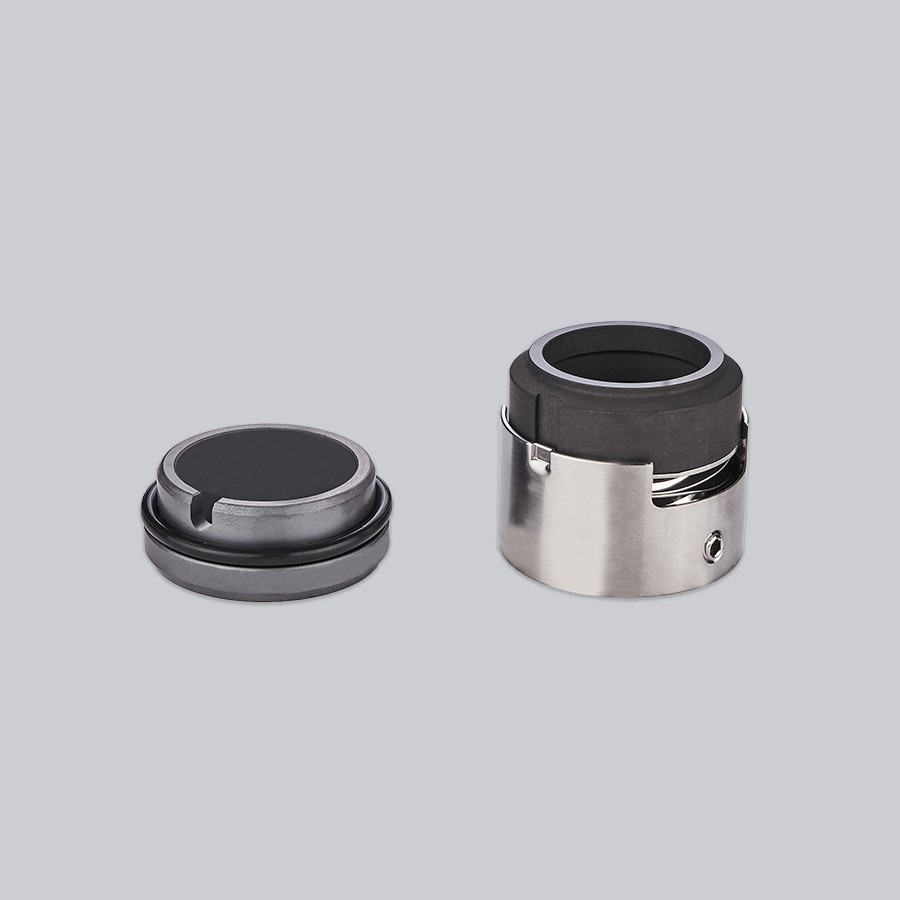
WH7N O-Ring Component mechanical seals, Eagle burgmann H7N replacement
Features
• For stepped shafts
• Single seal
• Balanced
• Super-Sinus-spring or multiple springs rotating
• Independent of direction of rotation
• Integrated pumping device available
• Variant with seat cooling available
Advantages
• Universal application opportunities (standardization)
• Efficient stock keeping due to easily interchangeable faces
• Extended selection of materials
• Flexibility in torque transmissions
• Self-cleaning effect
• Short Installation length possible (G16)
Recommended applications
• Process industry
• Oil and gas industry
• Refining technology
• Petrochemical industry
• Chemical industry
• Power plant technology
• Pulp and paper industry
• Food and beverage industry
• Hot water applications
• Light hydrocarbons
• Boiler feed pumps
• Process pumps
Operating range
Shaft diameter:
d1 = 14 … 100 mm (0.55″ … 3.94″)
(Single spring: d1 = max. 100 mm (3.94″))
Pressure:
p1 = 80 bar (1,160 PSI) for d1 = 14 … 100 mm,
p1 = 25 bar (363 PSI) for d1 = 100 … 200 mm,
p1 = 16 bar (232 PSI) for d1 > 200 mm
Temperature:
t = -50 °C … 220 °C (-58 °F … 428 °F)
Sliding velocity: vg = 20 m/s (66 ft/s)
Axial movement:
d1 up to 22 mm: ± 1.0 mm
d1 24 up to 58 mm: ± 1.5 mm
d1 from 60 mm: ± 2.0 mm
Combination material
Rotary Face
Silicon carbide (RBSIC)
Carbon graphite resin impregnated
Tungsten carbide
Cr-Ni-Mo Steel (SUS316)
Stationary Seat
Silicon carbide (RBSIC)
Carbon graphite resin impregnated
Tungsten carbide
Auxiliary Seal
Fluorocarbon-Rubber (Viton)
Ethylene-Propylene-Diene (EPDM)
Silicone-Rubber(MVQ)
PTFE Coated VITON
Spring
Stainless Steel (SUS304)
Stainless Steel (SUS316)
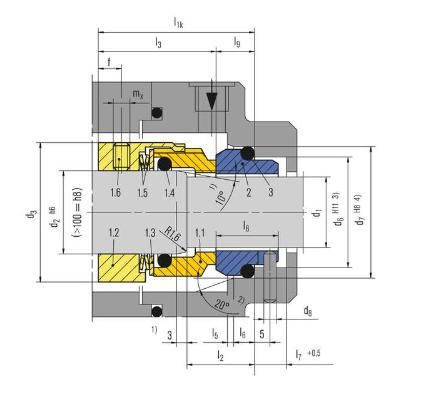
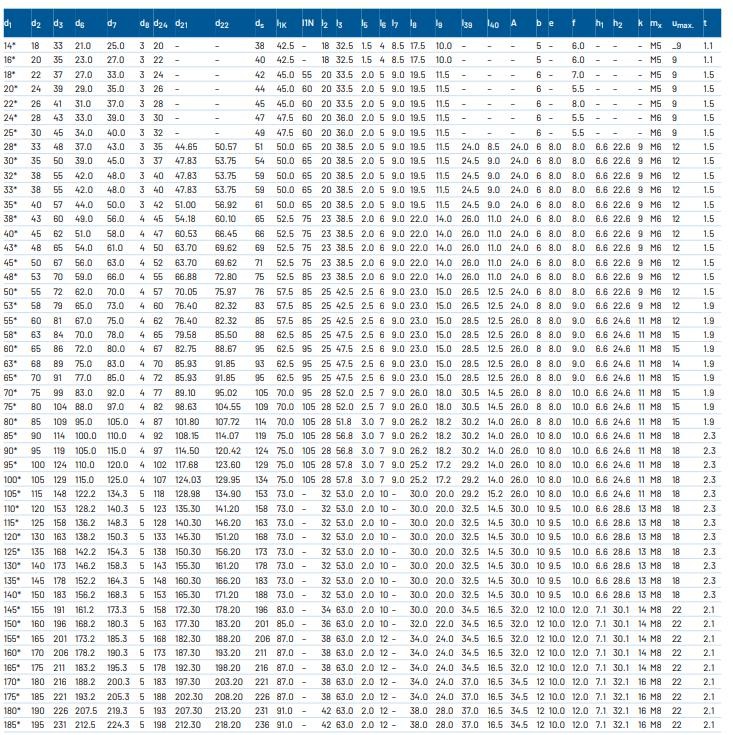
WH7N data sheet of dimension (mm)
WAVE SPRINGS ARE COMPACT BIDIRECTIONAL SEALS ORIGINALLY DESIGNED FOR SHORT WORKING LENGTH AND HYGIENIC REQUIREMENTS.
Wave springs are mechanical seals designed to replace conventional round wire compression springs in applications that require a tight load deflection specification in a space critical environment. They provide a more even face loading than a Parallel or Taper Spring, and a smaller envelope requirement to achieve a similar face loading.
Bi-directional mechanical seals offer proven seal design and wave spring technology, in a range of material combinations. This is enhanced by superior design features, all at very competitive prices.
Description
WH7N O-Ring Component mechanical seals, Eagle burgmann H7N replacement is a replacement seal supplied for general pump duty. Most units go into light-duty chemical transfer. Bore and shaft tolerances follow the original part, so no adaptor is needed.
Sealing geometry follows the original, built around O-ring mounting that keeps the spring out of the pumped medium. Faces are carbon graphite against silicon carbide, with NBR secondary sealing as standard.
Exact limits follow the face material and elastomer choice; confirm the duty point against the datasheet for the specific build. Running the pump dry, even briefly, will damage the faces.
Check the shaft for wear at the secondary seal track and the chamber for scoring before the new unit goes on. The first signs of wear are a slow leak at the secondary seal and a light polish on the faces.
As a rule, EPDM suits water-based duty, FKM suits oils and fuels, and FFKM is used where solvents would swell the other two. Fitting a complete replacement keeps the face load and working height as they left the factory, rather than rebuilding the stack on site. A spare on site is worth holding for critical pumps, where a leaking seal takes the whole line out of service.
Pricing and availability follow the pump model and shaft size given on the enquiry. The unit belongs to the mechanical seal supplier line. Two close alternatives are WM74D Double face mechanical seals replacement of Burgmann M74D and WHJ92N Wave Spring Mechanical Seals Replacement For Burgmann HJ92N. Include the quantity and the required elastomer option with the enquiry. The first signs of wear are a slow leak at the secondary seal and a light polish on the faces. Replacing the complete unit rather than single components avoids re-setting the working height, which is where most repeat failures start.