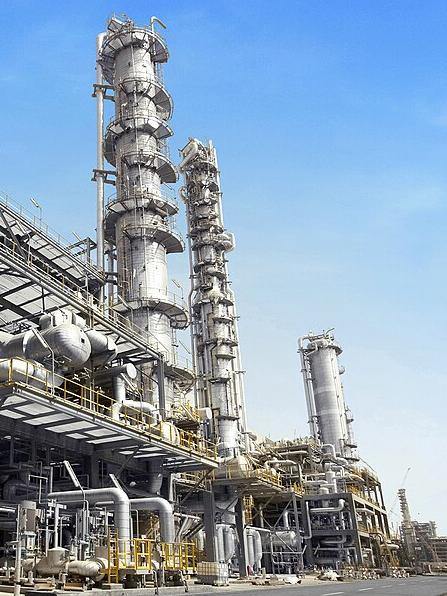

Cartridge mechanical seals are the preferred choice when installation reliability, minimal downtime, and consistent performance in critical applications are top priorities. A cartridge seal is a factory-preassembled, self-contained module: all components — seal faces, springs, sleeve, and gland — are aligned and set at the factory, so the unit arrives as a single ready-to-install piece rather than a kit of loose parts.
This pre-engineered design eliminates the need for on-site adjustments required with a component mechanical seal. While component seals remain a cost-effective option for skilled teams handling low-risk, predictable duties, cartridge seals reduce human error, shorten repair time, and deliver more repeatable performance across pump rebuilds. This guide breaks down the ideal use cases, tradeoffs, and selection factors to help you choose the right seal type for your operation. If that is your case, Why Cartridge Mechanical Seals Are Better for Easy Maintenance goes further.Key Takeaways
- Cartridge seals come pre-assembled and pre-aligned, eliminating most on-site installation errors and reducing reliance on skilled labor.
- Pre-built modules cut pump downtime during replacements, as no on-site measurements or face gap adjustments are required.
- Double cartridge seals provide controlled leakage protection for toxic, abrasive, or volatile process fluids.
- Compact cartridge designs fit tight stuffing box clearances and deliver lower total cost of ownership over the seal’s service life.
- Choose cartridge seals for critical, high-risk applications; use component seals for simple, low-risk duties handled by experienced maintenance teams.
What Is a Cartridge Mechanical Seal?
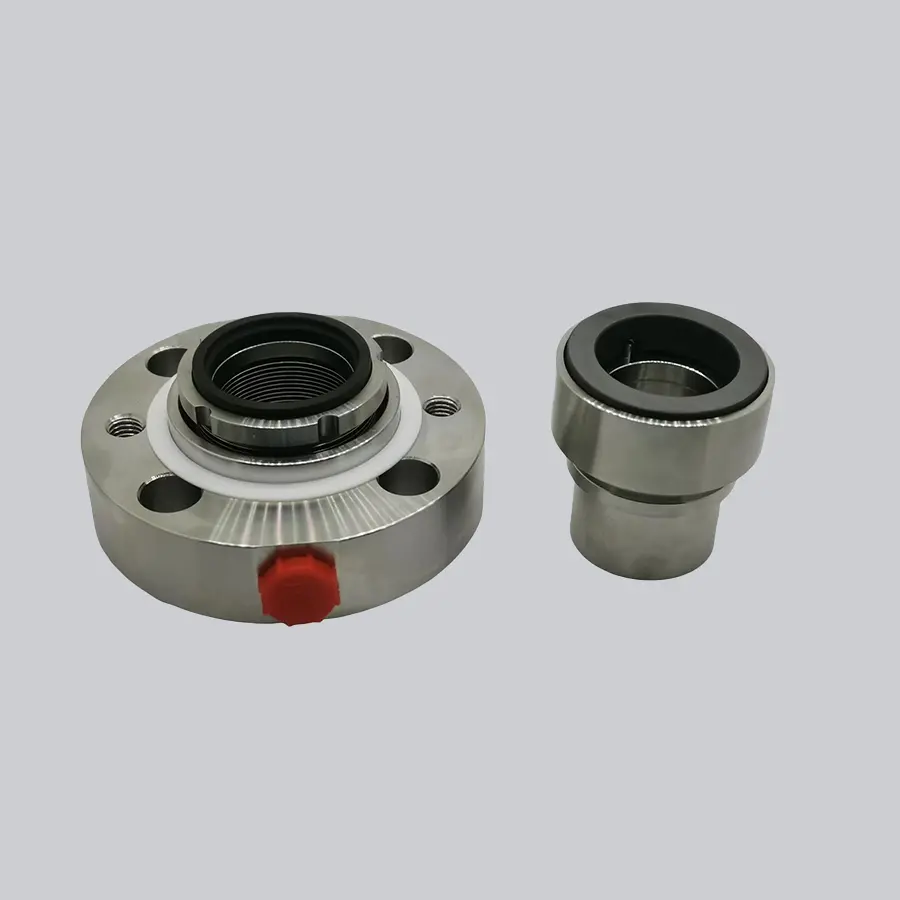
A cartridge mechanical seal integrates the seal faces, spring pack, rotating sleeve, and stationary gland into one fully assembled unit. Factory technicians set spring compression, face alignment, and sleeve position before shipping, and setting clips lock the assembly in place until installation.
By contrast, a component mechanical seal ships as individual loose parts that must be assembled, measured, and adjusted on site by a trained technician.
When to Choose a Cartridge Mechanical Seal
1. Sites with Limited Skilled Labor or Remote Locations
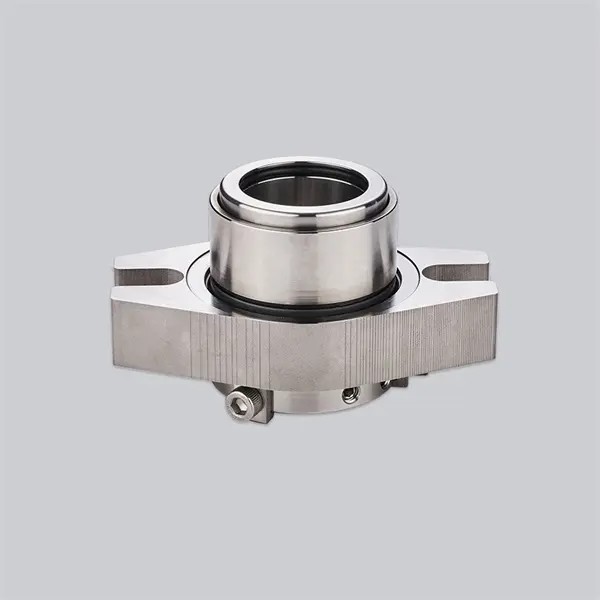
Installation error is the leading cause of early seal failure. Cartridge seals remove nearly all on-site adjustment work: technicians simply slide the unit onto the shaft, tighten gland bolts, and remove the setting clips. No measurements of face gap, spring height, or sleeve position are required.
This benefit is amplified at remote pumping stations or facilities with small maintenance teams, where staff may handle a wide range of tasks beyond specialized seal work. Even less experienced crews can complete a correct, reliable installation.
2. Contamination-Sensitive Environments & Seal Face Protection
Lapped seal faces are extremely fragile: a single grain of grit or accidental contact during handling can create a leak path. Cartridge seals enclose all critical components inside the module, protecting faces from dirt, dust, and damage during transport, storage, and installation.
This is especially valuable in dirty plant environments where maintenance work occurs near process spills or airborne particulates. The enclosed design also eliminates the risk of mixing up parts or assembling components in the wrong order.
Quality manufacturers like Victor pressure-test every cartridge seal, verify dimensional alignment, and inspect face flatness before shipping, so the unit is ready for service straight out of the box.
3. High-Cost Downtime Applications
Every hour of pump downtime costs plants in lost production, idle labor, and emergency repair expenses. Cartridge seals drastically shorten replacement time: there is no on-site assembly or adjustment, so swap-outs are fast and repeatable.
For fleets of pumps across a facility, standardizing on cartridge seals also simplifies spare parts inventory, reduces training time, and delivers consistent performance across every rebuild. Unlike component seals, which can vary in performance based on the technician installing them, cartridge seals deliver identical results pump after pump, rebuild after rebuild.
4. Hazardous, Abrasive, or Volatile Process Fluids
For fluids that pose safety, health, or environmental risks, double cartridge seals are the standard solution. These designs use two seal face sets (an inner process face and an outer secondary face) with a pressurized buffer fluid circulating between them. Buffer fluid pressure sits above process pressure, ensuring any cross-flow moves buffer into the process — never hazardous process fluid into the plant environment.
The pre-assembled cartridge design applies equally to double seals: all internal components and flush connections are factory-set, removing assembly errors that could compromise containment.
Common applications include:
- Toxic or corrosive chemical pumps
- Abrasive slurry services
- Volatile petroleum and hydrocarbon fluids
- Pharmaceutical and sanitary process pumps
Seal face and elastomer materials can be matched to the fluid: carbon, silicon carbide, or tungsten carbide faces; Viton, EPDM, AFLAS, or PTFE secondary seals; and 304 or 316 stainless steel metal components.
Cartridge vs. Component Mechanical Seals
| Factor | Cartridge Mechanical Seal | Component Mechanical Seal |
|---|---|---|
| Installation | Pre-assembled; no on-site adjustment required | Loose parts; requires skilled labor for assembly and alignment |
| Error risk | Very low; factory-set alignment | Higher; dependent on technician skill |
| Replacement speed | Fast; minimal downtime | Slower; requires measurement and adjustment |
| Performance consistency | Highly repeatable across rebuilds | Variable; depends on installation quality |
| Upfront cost | Higher | Lower |
| Total cost of ownership | Lower (less downtime, longer service life) | Higher for high-cycle or critical duties |
| Best for | Critical applications, remote sites, hazardous fluids, limited skilled labor | Simple low-risk duties, experienced maintenance teams, older/non-standard equipment |
Key Selection Considerations for Mechanical Seals
Space Constraints
Cartridge seals pack all components into a compact single module, making them well suited for pumps with tight stuffing box clearances, close-coupled designs, and retrofit projects. Component seals require extra space for on-site assembly and adjustment.
Note that off-the-shelf cartridge seals may not fit every pump model, especially older or custom equipment. Custom cartridge seals solve this issue: manufacturers like Victor design units to match specific pump dimensions and operating conditions for a precise fit.
Total Cost of Ownership
While cartridge seals have a higher upfront purchase price, the total lifetime cost is often lower:
- Reduced installation labor costs
- Shorter pump downtime
- Longer average service life due to factory-aligned faces
- Fewer premature failures from installation error
Component seals remain more economical for simple, low-risk applications handled by experienced fitters. The right choice depends on full lifecycle cost, not just initial purchase price.
FAQ
Does a cartridge seal fit any pump?
No. Cartridge seals are sized to match specific stuffing box dimensions. Off-the-shelf models fit most standard pump designs, and custom cartridge seals are available for non-standard or older equipment. Many manufacturers also offer engineered-equivalent units for popular OEM pump brands.
When is a component seal the better choice?
Component seals are more economical for simple, low-risk applications handled by skilled, experienced maintenance teams. They are also often the only option for very old or custom pump designs where standard cartridge seals are not available.
Should I choose a single or double cartridge seal?
Fluid type determines this. Single seals are suitable for clean, non-hazardous fluids. Double seals with a buffer fluid system are required for toxic, abrasive, or volatile media to prevent process leakage and protect personnel and the environment.
What materials work best for harsh process fluids?
For abrasive slurries, use hard seal faces such as silicon carbide or tungsten carbide. For corrosive media, pair resistant elastomers (Viton, EPDM, AFLAS, PTFE) with 304 or 316 stainless steel metal components.
How long does cartridge seal installation take?
Installation follows a simple, repeatable sequence: prepare the pump shaft, install the gland gasket, slide the cartridge unit into place, align and evenly tighten gland bolts, remove setting clips, and perform a controlled startup. No on-site measurement of face gap or spring compression is needed.